

The fastest way to find a group activity this week is to combine three channels at once: an activity-partner app like Conppi for same-day or same-weekend matches, event marketplaces, and venue calendars for scheduled bookings, and local clubs or Meetup-style groups for recurring, low-pressure gatherings. Apps work best when you want to move today; listings suit planned outings two or more weeks out; clubs win for anyone who wants a standing weekly habit. Pick one, RSVP within 48 hours, and you should be sitting across from new people within a week.
TL;DR:
- Activity-partner apps like Conppi provide instant matches for same-day activities with limited privacy concerns, ideal for quick meetups.
- Event marketplaces and venue calendars are best for planning specific outings weeks in advance, especially for larger or scheduled bookings.
- Recurring local clubs and groups offer stable, low-pressure routines for building ongoing connections, with success dependent on regular attendance.
- Choosing activities should align with your goal, budget, and group personality, favoring recurring, low-commitment formats to foster habits more easily.
- Always verify organizer credibility, venue accessibility, and clear payment arrangements before committing to in-person group activities.
Table of Contents
- Where to Find Group Activities: Apps, Listings, and Local Clubs
- 25 Group Activities You Can Actually Join This Week
- How to Pick the Right Activity Without Overthinking It
- Your Planning Checklist Before You Show Up
- Why an Activity-Partner App Solves the Real Problem
- What Actually Makes Small Meetups Work
- Try Conppi: Find a Partner and Join an Activity Today
- Sources
- FAQ
Where to Find Group Activities: Apps, Listings, and Local Clubs
Every method of finding a group activity falls into one of four buckets, and each one solves a slightly different problem. Knowing which bucket fits your situation saves you from scrolling four different platforms before you find anything worth attending.
Activity-partner apps solve the "I want to do something today, with someone, and I don't have a group yet" problem. Conppi works by matching you with people nearby who are free for the same kind of activity right now, without profiles to build or swiping to do. You set what you want to do (tennis, a coffee meetup, co-working, a run) and a rough time window, and the app surfaces people looking for the same thing nearby. A few things make this format different from a typical listing:
- Real-time matching instead of scheduled event pages, so you can find a partner for this afternoon, not just next month.
- Activity-specific filters for skill level and timing, so a casual jogger doesn't get paired with someone training for a marathon.
- Privacy by approximate distance rather than exact location, which matters if you're meeting a stranger for the first time.
Event marketplaces and outing providers are the right tool when you're planning something further out, want a specific format (escape room, cooking class, group hike), or need to book for more than two or three people. Search by date, group size, and price range, and check the provider's cancellation policy and minimum headcount before you commit. Tourism boards and professional event associations often maintain curated seasonal listings that surface options you won't find through a general search.
Venue calendars, sports clubs, and hobby groups are worth a direct look when you already know the activity, just not the people. Padel clubs, running crews, and board game cafés usually post weekly schedules and welcome drop-ins, but it pays to email or message the organizer first to confirm the session is actually beginner-friendly and still has open spots.
Local social channels — Facebook groups, Telegram and WhatsApp communities, Meetup groups, and neighborhood noticeboards — remain some of the most active spaces for finding recurring gatherings. Before joining one, check for recent activity (a group with no posts in six months is dead), a real organizer profile, and reviews or comments from past attendees. That quick check filters out most low-quality or inactive listings in under a minute.
Sometimes the smarter move is skipping all of the above and organizing your own small meetup instead. If you have four or five people who share an interest but no event exists yet, a private group is faster to arrange and easier to control than joining something that's already half full of strangers.
25 Group Activities You Can Actually Join This Week
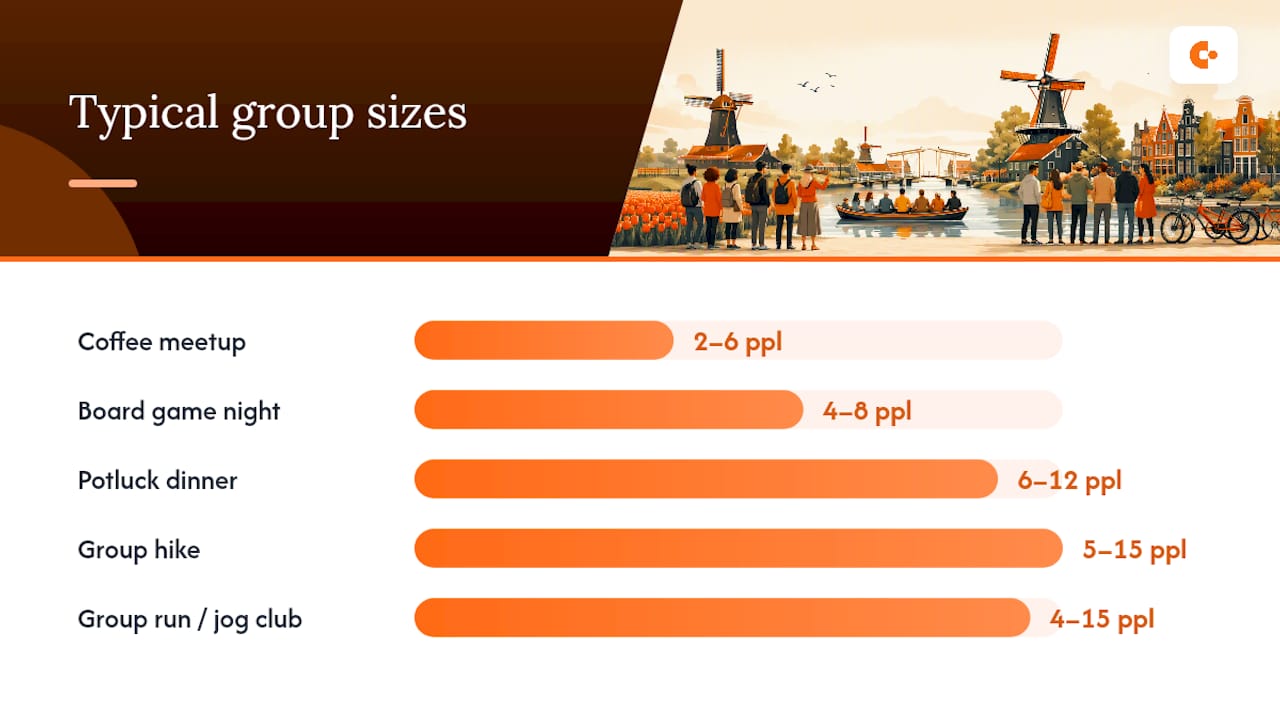
These are grouped by what you're actually trying to get out of the gathering, not by activity type alone. Each one lists ideal group size, rough duration, what you need, typical cost, and how people usually find or join it.
Quick social meetups
- Coffee meetup. Two to six people, 45 to 90 minutes, any café, free beyond your order. Found through activity-partner apps or a quick post in a local group.
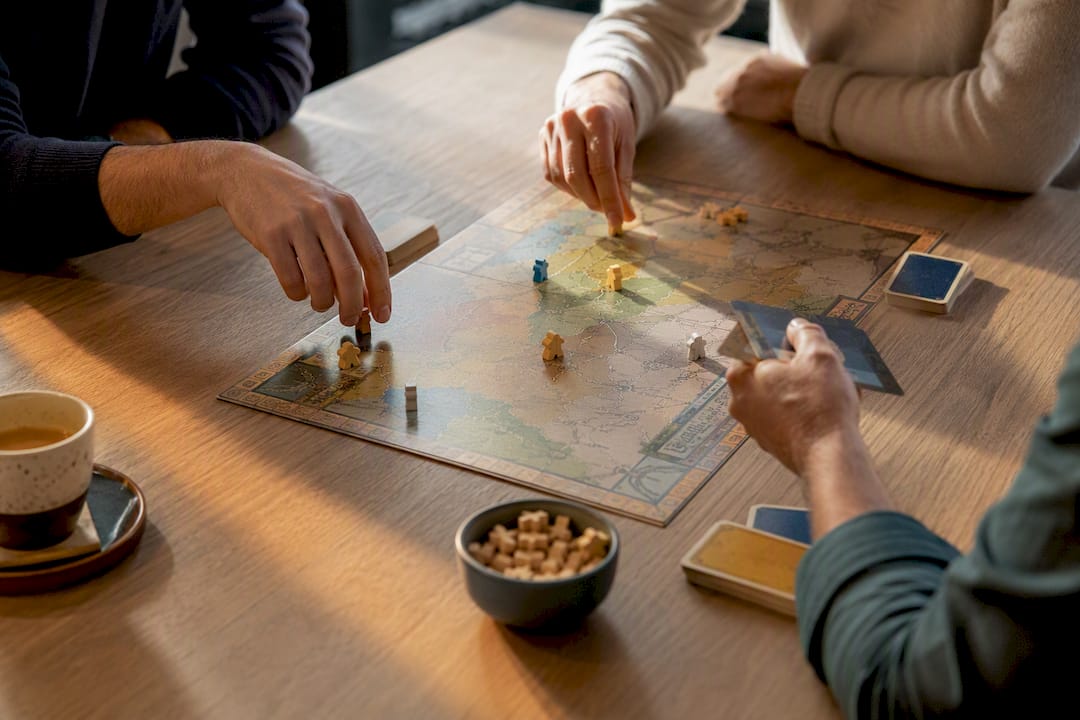
- Board game night. Four to eight people, two to three hours, board game cafe or someone's living room, $10 to $20 per person if renting a venue. Joined through Meetup groups or hobby cafe calendars.
- Pub trivia team. Four to six people, one to two hours, local pub hosting trivia, free to join, drinks/food extra. Show up solo and most pubs will slot you into an open team.
- Walking group. Three to ten people, 45 to 60 minutes, any park or waterfront, free. Common on running-club adjacent Facebook groups and city subreddits.
- Potluck dinner. Six to twelve people, two to three hours, someone's home, free if everyone brings a dish. Best organized privately rather than found publicly.
Outdoor and active
- Group run or jog club. Four to fifteen people, 30 to 60 minutes, any route with a meeting point, free. Most cities have at least one weekly running crew posted on Instagram or Strava clubs.
- Padel or tennis doubles. Four people, one hour, a booked court, $15 to $40 per court depending on the venue. An activity-partner app is often faster here than waiting on a club waitlist.
- Footgolf or mini golf outing. Four to eight people, 90 minutes, a footgolf course, $15 to $25 per person. Book directly through the venue's calendar.
- Group hike. Five to fifteen people, two to four hours, a trailhead, free beyond transport. Hiking-specific Meetup groups are usually the most active option.
- Bike ride. Four to twelve people, one to two hours, any cycling-friendly route, free unless renting bikes. Cycling clubs post recurring weekend routes online.
- Cycling and swim meetups through club sign-ups. Same format as running groups, often organized around a local sports center's noticeboard.
Competitive games and challenges
- Escape room. Four to six people, 60 minutes, a booked escape room venue, $25 to $40 per person. This format also doubles as a genuine team-building exercise, since it forces fast role distribution under pressure.
- The marshmallow challenge. A small group activity lasting about 20 minutes using simple supplies like spaghetti sticks, tape, string, and a marshmallow, with minimal costs involved. A classic low-cost icebreaker that reliably surfaces who leads and who improvises.
- Trivia or pub quiz league. A recurring weekly activity for small groups lasting about one to two hours, typically free to participate. Great for a recurring group rather than a one-off.
- VR arcade session. Two to six people, 45 to 90 minutes, a VR venue, $20 to $35 per person. Book slots in advance on busy weekends.
- Scavenger hunt. Six to twenty people, 90 minutes to two hours, a neighborhood or park, free to low-cost if using a printed list. Easy to organize yourself with a shared document.
Creative and food
- Cooking class. Four to ten people, two to three hours, a culinary studio, $50 to $90 per person. Book through the studio's own calendar, not a general marketplace.
- Blind drawing exercise. Two to eight people, 15 to 20 minutes, paper and pens only, free. One person describes an image, everyone else draws it without looking, then you compare results.
- Pottery or paint night. Six to fifteen people, two hours, a studio or bar hosting the event, $30 to $50 per person including supplies.
- Wine or beer tasting. Six to twelve people, 90 minutes, a tasting room or bar, $25 to $45 per person. Most venues take direct bookings for private groups.
Co-working and networking
- Co-working morning. Two to eight people, three to four hours, a cafe or co-working space, free to $15 for a day pass. Recurring co-working meetups tend to build stronger ties over time than one-off events, since the low commitment keeps people coming back. Apps built for this, like Conppi's co-working matching, work well for solo remote workers who want company without the noise of a full office.
- Industry networking mixer. Ten to fifty people, one to two hours, a bar or event space, often free with registration. Found through professional associations or city business calendars.
- Language exchange meetup. An activity involving small groups lasting around one to one and a half hours, usually free, often held in cafes or community centers. Usually organized through recurring weekly listings.
Low-prep icebreakers
- Two Truths and a Lie. Any group size, 15 to 20 minutes, no supplies. Works as an opener before almost any other activity on this list.
- Think-pair-share discussion. Any group size, 20 to 30 minutes, a discussion prompt only. Borrowed from small-group teaching formats, it works surprisingly well for adult meetups where people are shy about speaking to a full room right away.
How to Pick the Right Activity Without Overthinking It
Three questions get you to a decision faster than browsing another list. First, clarify the goal: are you trying to make friends, find a workout partner, build a professional network, or just fill a Tuesday evening? Second, check logistics: what's your real budget, how much time do you actually have, and does the venue work for everyone's mobility and schedule? Third, match the group's personality: a quiet group of readers will hate an escape room, and a competitive group of five will get bored at a slow-paced pottery class.
Here's how that plays out in practice:
- New to the city, know nobody: Start with a recurring low-commitment option like a co-working morning or a walking group. Fewer strangers at once, easier to return.
- Want a workout partner, not a whole crowd: Skip group listings entirely and use an activity-partner app filtered to your sport and skill level.
- Team outing for six coworkers: Book an escape room or a cooking class. Both give structure so nobody has to manage the small talk alone.
- Solo traveler with three free hours: Look for a walking tour or a language exchange meetup happening that evening.
- Tight budget, big group: A potluck or a park scavenger hunt costs almost nothing and scales easily to fifteen people.
- Recurring group that wants to bond over months: A weekly running club or trivia team builds familiarity faster than a single big event ever will.
Watch for a few red flags before you commit. An organizer with no reviews, a vague cancellation policy, or a minimum headcount that seems inflated to guarantee revenue are all reasons to ask questions first. Pro Tip: Message the organizer directly before paying anything. A real organizer answers within a day; a scam listing usually goes quiet.
Your Planning Checklist Before You Show Up
Most group activities fall into three cost bands: free (walks, potlucks, park meetups), low-cost at $10 to $30 per person (trivia, board game cafes, casual sports court rentals), and paid venue bookings above $30 (cooking classes, escape rooms, tasting sessions). Book paid venues at least a week ahead during busy seasons, and same-day is realistic only for app-based matching or drop-in club sessions.
Run through this before confirming attendance:
- Check the venue's accessibility for mobility, hearing, or sensory needs. Accessibility resources exist specifically to help you verify this in advance rather than finding out at the door.
- For first meetups with strangers, choose a public, well-reviewed venue and share only approximate location details until you've actually met.
- Confirm who's organizing payment. Split bills, prepaid tickets, and "pay the organizer back" arrangements all need to be clear before the day, not during it.
- Match the setting to the activity type. Informal chats need flexible, quiet spaces, while competitive games need semi-private areas so nobody's shouting over other cafe patrons.
- RSVP with a clear yes or no, and cancel at least 24 hours out if plans change. Recurring groups remember who flakes.
Why an Activity-Partner App Solves the Real Problem
Most people don't lack access to group activities. They lack a fast way to find someone to do them with. That gap is exactly what drives measurable loneliness even in dense, activity-rich cities, and it's a big part of why social connection research increasingly points to low-barrier, in-person group activities as one of the more effective tools against isolation. Community engagement doesn't need to be complicated to work. It needs to be easy to start.
This app is built around that gap specifically. Instead of building a profile and waiting for matches, you set what you want to do (tennis, co-working, a coffee meetup, meeting a local while traveling) and get matched with someone nearby who wants the same thing, right now. The privacy model shares only approximate distance rather than an exact address, which lowers the friction of meeting someone new for the first time.
A typical session looks like this: search for the activity and time window you want, get matched with someone nearby doing the same thing, send a quick message to confirm the plan, and meet up. No lengthy chat required beforehand, no profile-building, no swiping through people who aren't actually free today. For someone who wants a padel partner on Saturday morning or company for a Wednesday co-working session, that's usually faster than scrolling four different listings hoping something lines up.
What Actually Makes Small Meetups Work
The activities on this list mostly succeed or fail based on one variable: how much friction stands between "I want to go" and "I showed up." A perfectly curated cooking class fails if it requires three weeks of planning and a group chat that dies after message four. A mediocre walking group succeeds because it happens every Saturday at 9 a.m., rain or shine, no RSVP needed.
That's the pattern worth remembering. Recurring, low-commitment formats beat elaborate one-off events almost every time, because showing up gets easier once it's a habit rather than a decision you have to make fresh each week.
Three things to try immediately: pick one recurring activity and commit to four weeks before judging it, ask the organizer a direct question before your first session to break the ice early, and default to public, well-lit venues for any first meetup with someone you found online. If you want a deeper walkthrough on turning a one-time co-working session into a standing habit, the co-working matching guide covers that transition step by step.
— Ilya
Try Conppi: Find a Partner and Join an Activity Today
Conppi skips the part where you scroll through five listings hoping one fits your schedule. Instead of browsing event calendars or waiting on a club's next open slot, you get matched with someone nearby who wants to do the same thing at the same time, whether that's a tennis match, a co-working morning, or a coffee catch-up.
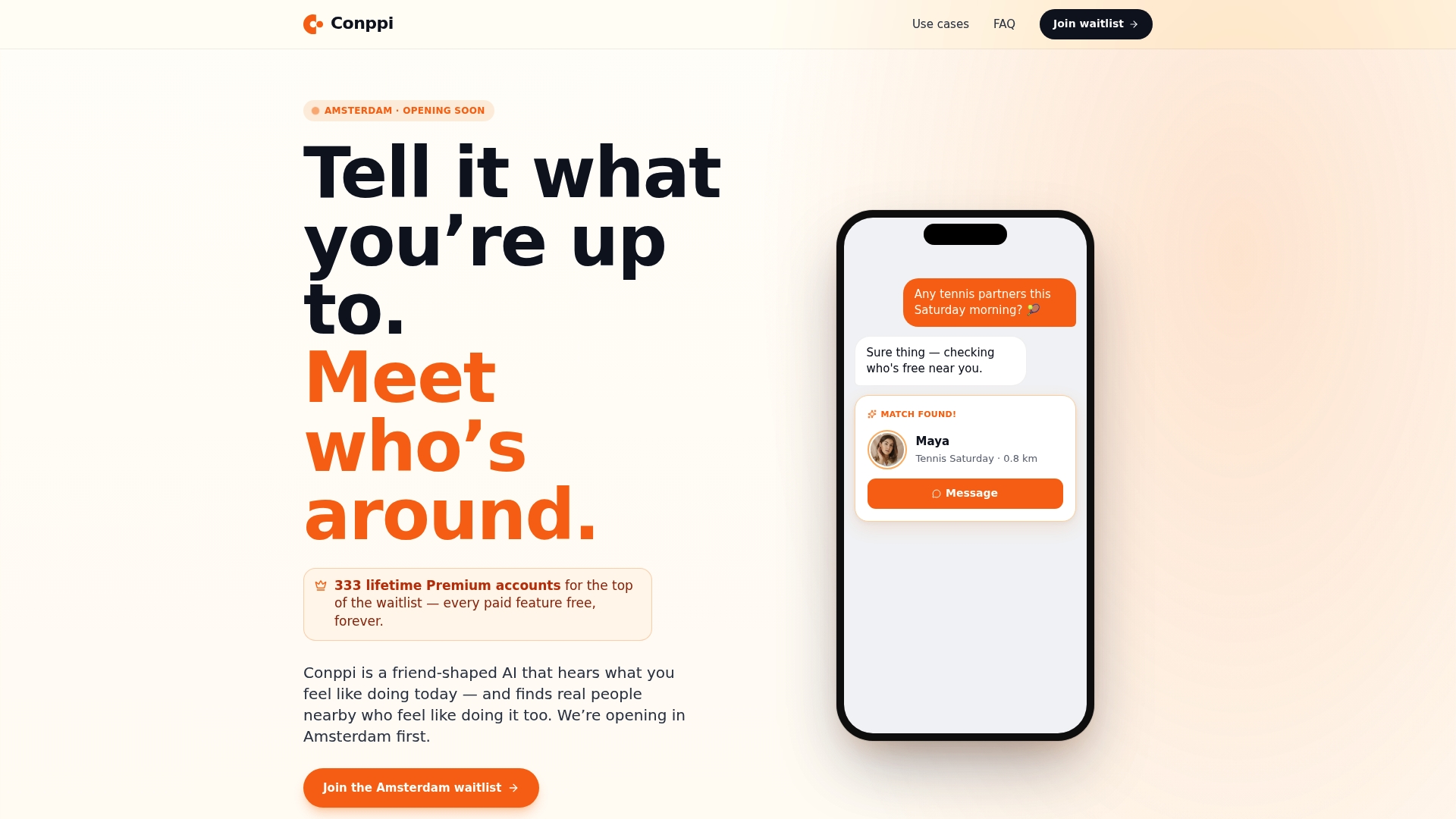
Getting started takes three steps: download the activity partner app, set the activity and availability window that works for you, and send or accept an invite from someone nearby looking for the same thing. There's no profile to perfect and no swiping involved, just a fast match based on what you actually want to do. If sports are your focus, the sports partner page filters specifically for that. If you travel often and want to meet locals rather than eat alone, the travel matching feature solves that exact problem. Open the app and set your first activity window today.
Sources
- Top 25 Team Building Activities for Small Groups in 2026 — Infinity Park Event Center
- NCBI (e.g., chapters on social interventions and community engagement)
- Loneliness in America report — Harvard Graduate School report (2024)
- Teaching resources — University of Chicago (physical environment guidance)
- Group work in the classroom: types of small groups — University of Waterloo
FAQ
What are examples of group activities?
Common examples include coffee meetups, group runs, escape rooms, cooking classes, board game nights, co-working sessions, and low-prep icebreakers like Two Truths and a Lie. The right pick depends on your group's size, budget, and whether the goal is bonding, competition, or just casual company.
Is Meetup a dating site?
No, Meetup is a platform for organizing interest-based group events like hiking, language exchange, or hobby clubs, not a dating app. Some users do meet romantic partners there, but the platform is built around shared activities and group attendance, not one-on-one matching.
What are some ideas for activities for groups?
Strong options include trivia nights, marshmallow challenge builds, walking groups, padel or tennis doubles, potlucks, and scavenger hunts, all of which scale from four people to fifteen or more. For finding a partner for a specific activity like a sports session or co-working morning, an app like Conppi often works faster than searching general listings.
Does anyone still use Meetup?
Yes, Meetup remains active for recurring interest groups such as running clubs, book clubs, and professional networking circles, though activity levels vary widely by group and city. Checking a group's recent post history before joining is the fastest way to confirm it's still active.