
If you're loading a bar for heavy bench, squats, or overhead presses and working close to failure, you need a spotter: someone who watches your bar path and steps in if it stalls. A spotter keeps you safe and lets you push harder with more confidence. The fastest next move is to politely ask an experienced lifter nearby or use an app to line one up in advance.
TL;DR:
- Get a spotter when at least two checklist factors apply: a risky lift, heavy load, near failure, or an unsafe setup.
- For squats, two spotters should stand at the bar ends; a failed overhead press is usually safer to drop than to catch.
- If neither a trustworthy spotter nor correctly set safety pins are available, reduce the load or skip a near maximal attempt.
- Before each bench set, agree on unracking help and a verbal cue; keep hands close, but intervene only if the bar stalls or drifts.
- A controlled study found that lifters with a spotter completed more total reps and lifted more total weight, while reporting lower exertion.
Table of Contents
- When do you need a spotter: clear rules and a quick gym checklist
- How to spot the bench press: step-by-step setup, cues, and intervention
- How to spot squats and power lifts: two-spotter techniques and safe single-spot options
- How to find a reliable spotter or training partner
- Safety equipment and alternatives to a human spotter
- Why consistent spotters build safer, more effective training habits
- Conppi: a simple way to post a spotting request and find recurring gym partners
- FAQ
- Sources
When do you need a spotter: clear rules and a quick gym checklist
Not every set needs a second person watching your bar, but some do. Exercises that load the bar over your face, neck, or shoulders, like the bench press, back squat, and overhead press, carry real risk if a rep fails and you can't rack it yourself. A spotter also matters more as intensity climbs: once you're working near failure, attempting a heavy single, or chasing a personal record, the margin for error shrinks fast.
A few other situations call for a spot even at moderate loads: trying a movement you haven't done before, feeling off balance under the bar, or experimenting with slow negatives or paused reps where fatigue builds unevenly.
Run through this before you load the bar:
- Exercise: does a failed rep trap the bar over your body (bench, squat, overhead press)?
- Load: are you at or above a high percentage of your working max?
- Fatigue: is this a set you expect to take to or near failure?
- Environment: is the rack, bench, or platform clear and are safety pins set correctly?
If you answer yes to two or more, get a spotter before you start.
How to spot the bench press: step-by-step setup, cues, and intervention
Good bench spotting is a sequence, not a reflex. Coaching guidance from Muscle & Fitness frames the spotter as an active partner in the lift, not just an emergency backup.
- Position yourself directly behind the bar with a stable, shoulder-width stance.
- Ask the lifter whether they want a lift-off and how many reps they're planning.
- Use a mixed or pronated grip on the bar for the hand-off, guiding it smoothly to the lifter's starting position without yanking it.
- Keep your hands close to the bar, just below it, through the working reps.
- Watch for stalling or drifting off path, and step in only when the bar truly slows or wanders.
- Use fingertip assistance first, adding just enough lift to keep the bar moving, and take over fully only if the rep is clearly failing.
Pro Tip: Agree on a verbal cue, like "I've got it" or "spot," before the set starts, so neither of you has to guess mid-rep.
Communicate before every set, not just the first one. Avoid touching the bar during a clean rep: early intervention can short-change the lifter's training stimulus and self-efficacy, the same effect researchers observed when spotters were present but passive. Practice the hand-off a few times with a new partner before loading real weight, so the motion feels automatic under pressure.

How to spot squats and power lifts: two-spotter techniques and safe single-spot options
Squats are harder to spot safely than bench press because the bar sits higher and the lifter's balance matters more. Starting Strength notes that heavy squats are best handled with two spotters, one on each side, rather than one person standing behind the lifter.
- Two-spotter setup: each spotter stands at one end of the bar, ready to grab the sleeve, not the lifter's body, if the rep fails.
- Single-spot technique: when only one person is available, hook an elbow under the bar sleeve or grab the plates evenly on both sides, communicating clearly so the bar comes down level rather than tipping.
- Overhead presses: these are usually safer to simply drop or step away from than to spot overhead, since a failed overhead rep is harder to catch cleanly.
- Collars and clear space matter as much as the spotters themselves. Loose plates or a cluttered platform turn a manageable failed rep into a real hazard.
As Wikipedia's entry on spotting) summarizes, squats typically call for more spotting support than single-bar lifts like curls or rows, precisely because of this balance and positioning risk.
How to find a reliable spotter or training partner
Most lifters find their first spotter the direct way: by asking.
- Approach politely between sets: "Hey, I'm about to do a heavy set of bench, mind giving me a spot?" works better than waiting and hoping someone offers.
- Offer to return the favor: suggest swapping spotting rounds so it's a trade, not a one-sided ask.
- Ask staff or a coach if the gym has floor trainers who spot as part of the job.
- Post a session on an app like Conppi, filtering by time, skill level, and whether you want a recurring partner rather than a one-off.
Set expectations up front: tell your spotter whether you want a lift-off, what cue you'll use if you need help, and how many sets you're doing. A quick script like "no lift-off, I'll say 'spot' if I need it, three sets of five" removes most of the guesswork.
Pro Tip: Treat your first session with a new spotter as a trial run: watch for punctuality, clear communication, and whether they actually apply the technique you discussed before trusting them with a max attempt.
Digital tools help here because they let you filter for compatible schedules and skill levels before you ever meet in person, and most only share approximate distance rather than your exact location, which keeps the search low-pressure.
Safety equipment and alternatives to a human spotter
When a reliable spotter isn't available, mechanical safety still gets you through a heavy set.
- Safety pins or bars: set them just below your lowest rep depth, close enough to catch a failed bar without interfering with your range of motion.
- Power racks and cages: these are the safer default for near-maximal singles, since the bar can fail completely without trapping you underneath.
- Collars: lock plates in place so a failed rep doesn't tip unevenly to one side.
- Even loading: double-check plates match on both sides before you start, especially after sharing a bar with another lifter.
If you don't have a trustworthy spotter and the rack has no properly set safety pins, the safest call is to drop the intensity or skip the attempt. Pushing a near-max single with neither backup in place isn't worth the risk.
Why consistent spotters build safer, more effective training habits
In my experience coaching lifters through their own programs, the biggest difference between people who stick with heavy training and those who plateau or quit isn't genetics, it's whether they have a reliable partner showing up with them. Research on spotter presence backs this up: lifters with a spotter watching complete more total reps and more total weight than when lifting alone, with lower perceived effort and higher confidence under the bar. A good spotter isn't just a safety measure, it's part of what makes consistent progress possible. Tools that help you find and schedule the same partner repeatedly, rather than starting from zero each session, make that consistency far easier to build.
— Ilya
Conppi: a simple way to post a spotting request and find recurring gym partners
We built our app around a simple problem: finding someone to train with shouldn't take more effort than the workout itself. Post a spotting request with your preferred time, experience level, and whether you're after a one-off session or a recurring partner, and the app only shares approximate distance, never your exact location, so you stay in control of what you reveal.
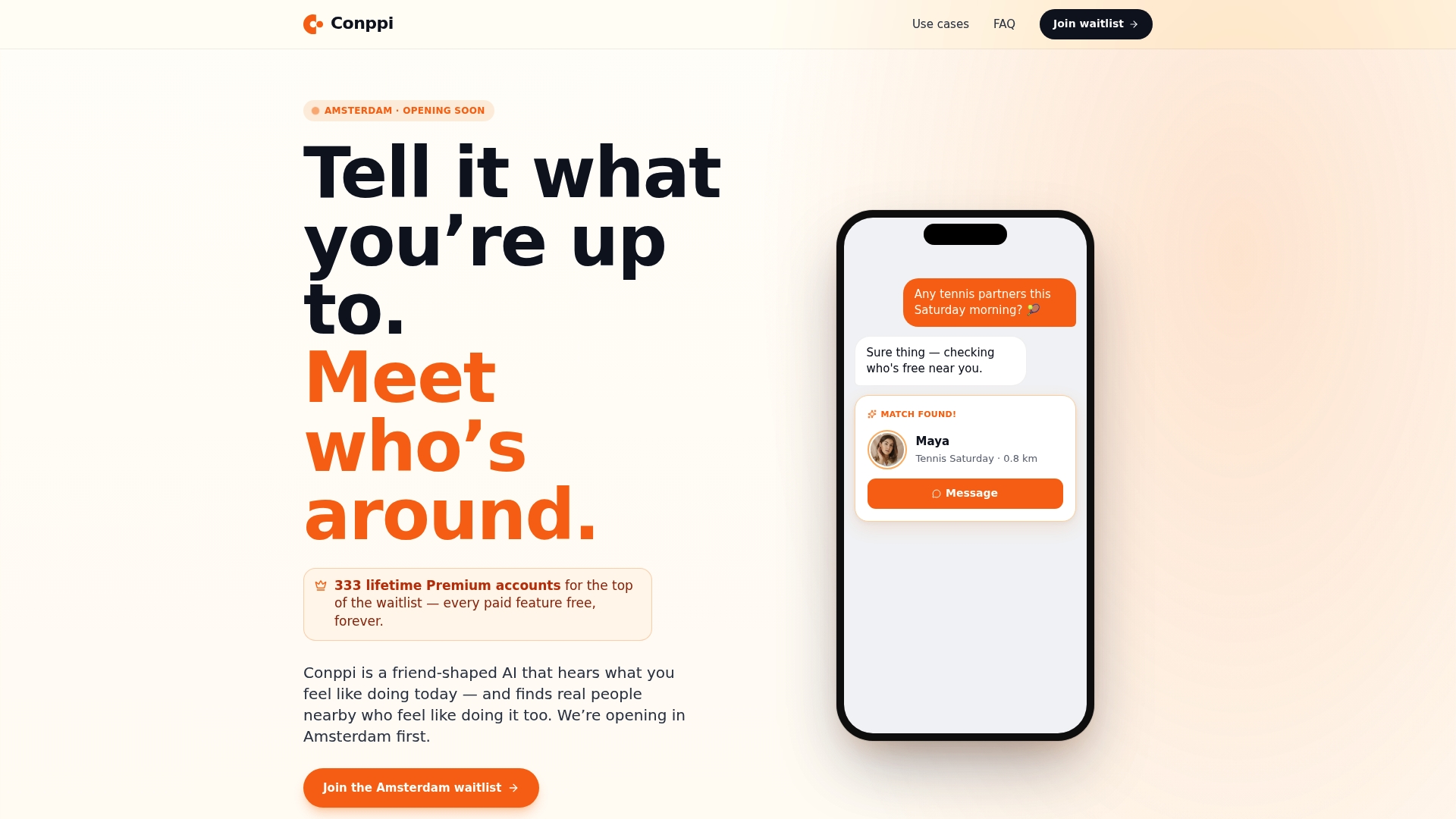
Setting up a recurring bench or squat day works the same way: flag the session as repeating, set your skill level filter, and match with lifters nearby who are looking for the same consistency you are. If you're ready to stop hoping someone's free at the rack and start planning it, check out our activity partner app or see how it works specifically to find a gym buddy.
FAQ
How do I find gym friends beyond just a spotter?
Start by asking regulars at your gym to swap spotting rounds, since that naturally turns into a standing training relationship over time. Apps that match people by shared activities and schedules, rather than swiping profiles, also work well for building a consistent gym circle.
Is it called a spotter or a supporter in the gym?
The correct term is spotter: someone who stands by to assist or take the bar if a lift fails. "Supporter" isn't the standard gym term and can cause confusion if you use it when asking for help.
What is the 3-3-3 rule at the gym?
Definitions of this rule vary across sources and it isn't a standardized industry term, so treat any specific version you see with caution. If you come across it in a program, check how that program defines it rather than assuming a universal meaning.
How do I track my gym progress effectively?
Logging your sets, reps, and weights after each session is the most reliable way to see whether you're progressing, and a simple notebook or phone app works fine for this. Pairing that log with a consistent spotter or training partner also helps, since research on spotter presence found lifters pushed harder and reported lower perceived effort when someone was watching their set.
Does having a spotter actually improve my lifts?
Yes: a controlled study found lifters completed more total reps and lifted more total weight when a spotter was present, compared to lifting alone, while also reporting lower perceived exertion. The psychological safety net a spotter provides appears to let lifters push closer to genuine failure with more confidence.
Sources
- Presence of Spotters Improves Bench Press Performance: A Deception Study. - Leeds Beckett Repository
- Presence of Spotters Improves Bench Press Performance: A Deception Study - Edge Hill University
- Top tips to safely spot someone: the bench press - Muscle & Fitness