
The main difference between platonic friendship and dating is intent and expectation, not the specific things you do together. Two people can share the same texting habits, the same late-night calls, even the same hug goodbye, and mean entirely different things by them. This article breaks down the checklist for telling them apart, gives you scripts for naming what you actually want, and lays out ways to protect the friendship if the answer isn't mutual.
TL;DR:
- Romantic interest often stems from shared stressors or proximity, but physical closeness alone does not reliably indicate romance or friendship.
- Clear expressions of intent and context-specific language are essential in distinguishing between platonic and romantic relationships, especially with words like "date" or discussions of exclusivity.
- After a confession of romantic feelings, giving both parties space and adjusting boundaries can help preserve the friendship, rather than over-explaining or dwelling on the rejection.
- Activity-based connections, such as sports or co-working meetups, provide an effective way to form platonic bonds without ambiguity or second-guessing.
- Cultural norms and social circles heavily influence what behaviors are considered acceptable or indicative of romance, so check local context before judging relationship signals.
Table of Contents
- Why Behavior Overlaps but Intent Matters
- Quick Checklist: Signs a Connection Is Platonic vs Signs It's Dating
- Physical Intimacy and Gray Areas: Is a Kiss Still Platonic?
- How Friendships Become Romantic: Pathways, Prevalence, and Risks
- How to Tell and How to Talk: Phrasing, Timing, and What to Expect
- Preserving the Friendship After Shifting Feelings: Realistic Strategies
- Activity-First Alternatives and How to Meet Platonic Partners
- Emotional Boundaries and Their Importance in Platonic vs Romantic Relationships
- Impact of Cultural and Societal Norms on Perceptions of Platonic Friendship and Dating
- Role of Mutual Friends and Social Circles in Navigating Platonic vs Dating Dynamics
- Psychological Differences in Attachment Styles Between Platonic Friends and Romantic Partners
- Author Perspective: Why Labels Matter Less Than Consent and Clarity
- Another Option: Meeting People Where Intent Is Already Clear
- Sources
Why Behavior Overlaps but Intent Matters
Intent is what you want the relationship to become. Expectation is what you assume the other person wants it to become. The gap between those two things is where most confusion lives, and it's why a hug, a long phone call, or a Saturday spent together can mean nothing romantic to one person and everything to the other.
Warm behavior is not a reliable romance detector. Close friends often act more affectionate than some couples, not less. Someone who remembers your coffee order, shows up when you're sick, or texts first every morning might just be a genuinely attentive friend. The science of friendship covered by the American Psychological Association makes this point directly: reading warmth or proximity as romantic intent is unreliable, and direct communication resolves ambiguity far better than pattern-watching.
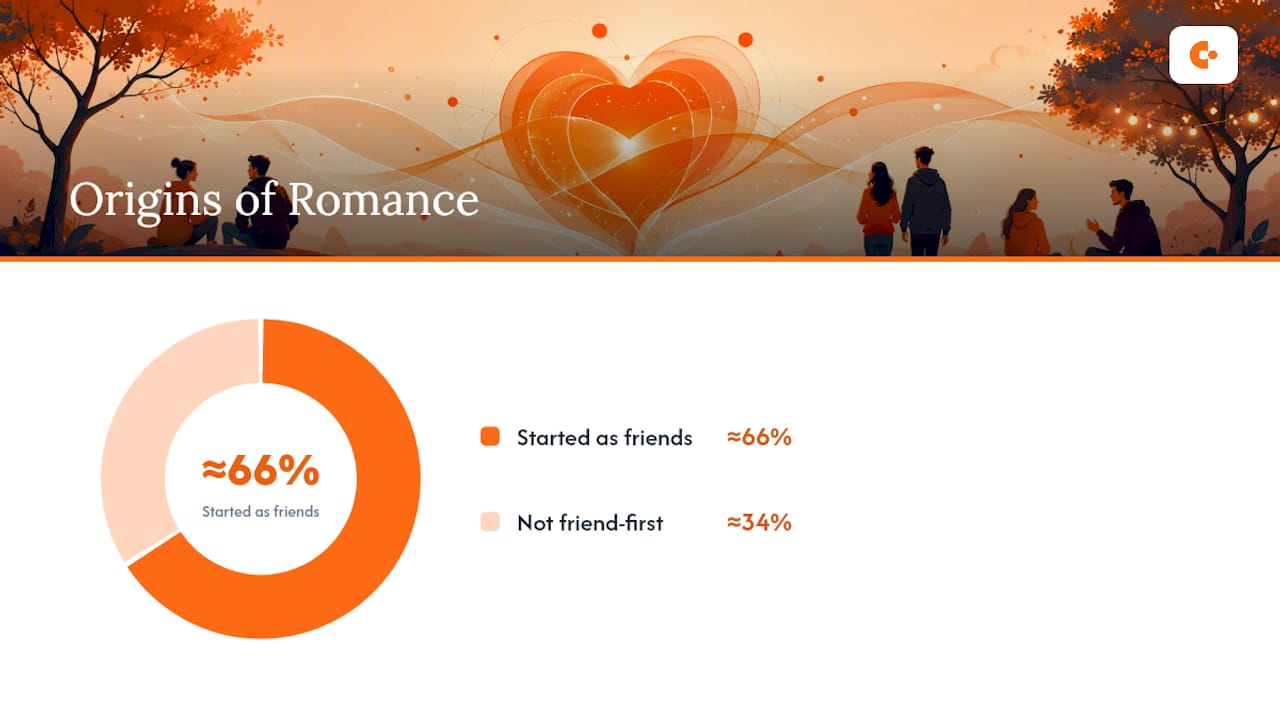
That unreliability is compounded by how often romance actually starts inside friendship. Pooled research across seven samples found that roughly two-thirds of respondents reported their romantic relationships began as friendships first. A few things that don't reliably signal romantic interest on their own:
- Frequent one-on-one time
- Physical affection like hugs or hand holding
- Late-night conversations about personal struggles
- Compliments about appearance
- Jealousy when the other person dates someone else
Any of these can appear in a purely platonic bond. Context and stated intent, not the gesture itself, decide what it means.
Quick Checklist: Signs a Connection Is Platonic vs Signs It's Dating
Run through this before you spend another month guessing.
- Setting. Platonic connections tend to happen in groups or default to casual, no-pressure settings. Dating usually involves at least some one-on-one time explicitly framed as "let's grab dinner, just us."
- Language. If either person has used the word "date," talked about exclusivity, or asked "what are we," that's dating territory. Silence on those words, with everything else left implied, usually signals platonic.
- Future talk. Discussing shared long-term plans as a couple (moving in together, meeting family as a partner) points to romance. Discussing shared plans as friends (a trip with a group, a shared apartment as roommates) points to platonic.
- Jealousy patterns. Mild curiosity about who someone is dating is normal in friendship. Active discomfort or possessiveness leans romantic.
- Physical exclusivity. Wanting to be the only person someone kisses or dates is a dating marker. Wanting to be a priority friend without romantic exclusivity is platonic.
A few caveats matter here. People on the asexual or aromantic spectrum may experience deep romantic or platonic bonds without the touch cues this checklist assumes, and trauma survivors sometimes avoid or seek physical closeness in ways unrelated to romantic interest. Cultural norms also shift the baseline. What counts as unusually close in one culture is standard practice in another. Use this checklist as a starting point, not a verdict.
Physical Intimacy and Gray Areas: Is a Kiss Still Platonic?
A kiss doesn't automatically convert a friendship into a relationship, and it doesn't automatically mean nothing either. Physical intimacy is not a universal marker of romantic status. Johns Hopkins University's student well-being resources point out that for asexual and aromantic people, and for people carrying trauma, physical acts often don't map to romantic intent the way people assume. A hug can be comfort. A kiss on a dare can be a joke. Cuddling during a scary movie can be exactly that.
What actually matters is what happens right after. A few short check-ins that cut through the fog:
- "Hey, what was that about for you?"
- "I want to make sure we're on the same page after that."
- "Did that feel like something to you, or just a moment?"
Pro Tip: Ask within 24 hours. Waiting a week to clarify an ambiguous kiss usually means both people quietly build separate stories about what happened, and those stories rarely match.
How Friendships Become Romantic: Pathways, Prevalence, and Risks
Friends-first romance is not a fringe pattern. It's closer to the default. Across pooled samples covering nearly 1,900 respondents, about two-thirds initiated romantically through friendship first rather than meeting as strangers with romantic intent from the start.
The pathway usually follows a few recognizable triggers:
- A shared crisis or stressful period that forces vulnerability (a breakup, a family emergency, a hard year at work)
- Extended proximity, like living nearby, working together, or traveling as a pair
- One person's life circumstances changing (ending another relationship, moving, a shift in routine) that opens space to notice the friendship differently
Relationship researchers interviewed by SELF describe this as "earned attraction." You already know how the person handles stress, money, and conflict, which tends to predict long-term compatibility better than fast chemistry from a first date. The risk runs the other direction too: if the feeling isn't mutual, you risk losing a friendship that took years to build over a few weeks of awkwardness. Move carefully when the friendship matters more to you than the romantic outcome does.
How to Tell and How to Talk: Phrasing, Timing, and What to Expect
Timing matters almost as much as wording. Speak up once the feeling has held steady for a few weeks, not the day after a single good hangout. Wait if you're mid crisis, freshly out of another relationship, or drinking. Clear heads produce cleaner conversations.
When you're ready, keep it short and specific:
- "Is this a date or a hangout?" before making plans, if you want to know before you show up.
- "I want to be upfront. I like you as more than a friend. No pressure to feel the same." said privately, sober, in person or on a call rather than by text.
- "I've been thinking about us as more than friends, and I wanted to just say it instead of hinting." for someone who prefers directness over subtlety.
Pro Tip: Decide before the conversation whether you're prepared to stay friends if the answer is no. Saying that out loud, right after you share your feelings, takes pressure off the other person to protect your ego along with their own answer.
If they don't feel the same, expect a few awkward weeks. Give both of you space, skip the group hangout for a bit if needed, and resist the urge to over-explain over text afterward.
Preserving the Friendship After Shifting Feelings: Realistic Strategies
The first 48 hours after disclosure set the tone for everything after. A few things that actually help:
- Thank them for their honesty instead of arguing with it
- Ask directly whether they want space or want to keep hanging out as usual
- Skip the follow-up texts fishing for a change of heart
- Rejoin group activities before attempting one-on-one time again
Longer term, some boundary adjustments protect the friendship better than pretending nothing happened. That might mean fewer late-night calls, more group settings, or simply less physical affection for a while. None of that has to be permanent.
Sometimes the honest move is accepting the friendship has changed shape, even if it survives. Grieving the version you hoped for while still valuing the one you have isn't contradiction. It's how most friendships that outlast a confession actually work.
Activity-First Alternatives and How to Meet Platonic Partners
One way to sidestep the whole guessing game is starting connections with an explicit, non-romantic purpose baked in from the first meeting using a relationship builder guide to strengthen your connections. Activity-based matching does this by design: the reason you're meeting is the tennis match, the co-working session, or the coffee catch-up, not an open-ended "let's see what happens."
Conppi's activity-first design works this way. Filters for sports, co-working, language exchange, and travel meetups frame the meeting around a shared task rather than romantic ambiguity, and the app shares only approximate distance rather than full profiles built for swiping. That structure removes a lot of the second-guessing this article has spent several sections untangling, because the context itself signals platonic intent before either person says a word about it.
Emotional Boundaries and Their Importance in Platonic vs Romantic Relationships
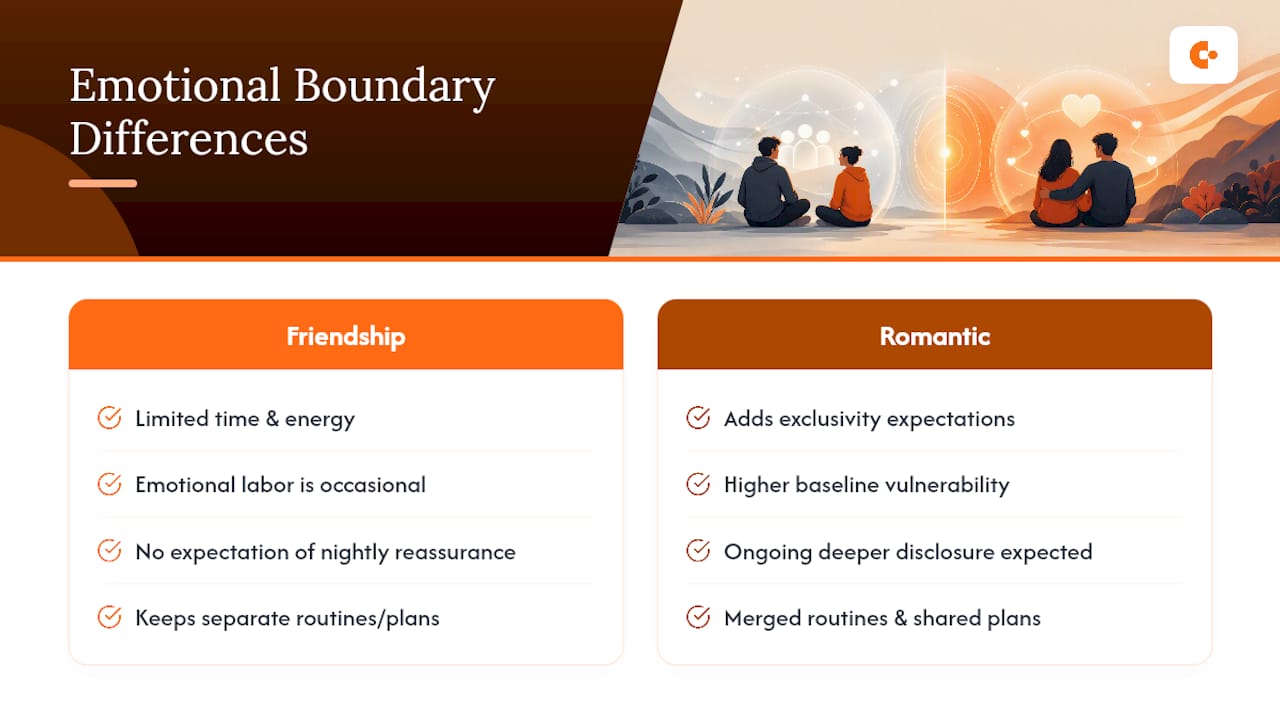
Emotional boundaries look different depending on which kind of relationship you're in, and mixing them up is a common source of confusion. In friendship, boundaries usually center on time, energy, and how much emotional labor one person can reasonably absorb. A good friend listens through a rough patch but isn't expected to manage your anxiety on a nightly basis or drop their own plans every time you're upset.
Romantic boundaries add layers that friendship doesn't carry: exclusivity expectations, merged routines, and a higher baseline of vulnerability around things like finances, family conflict, or long-term plans. Someone might tell a romantic partner things they'd never mention to even their closest friend, not because the friend is less trusted, but because romantic intimacy typically comes with an assumption of deeper, ongoing disclosure.
Trouble starts when one person applies romantic-level emotional expectations to a platonic bond, or vice versa. Expecting a friend to provide the kind of constant reassurance usually reserved for a partner puts unfair weight on the friendship. Expecting a partner to tolerate the casual, come-and-go availability that works fine between friends can leave them feeling like an afterthought. Naming what you actually need, and asking what the other person can realistically give, keeps both kinds of relationships from quietly resenting each other's shape.
Impact of Cultural and Societal Norms on Perceptions of Platonic Friendship and Dating
What counts as "too close for friends" shifts dramatically depending on where you grew up and what era you're looking at. The historical concept of romantic friendship shows that intensely close, physically affectionate non-sexual bonds were common and socially accepted in certain periods, including hand holding, shared beds, and effusive letters between friends of the same gender. Today, that same behavior would read as romantic to most Western observers.
Cross-culturally, the variation is just as wide. Some cultures treat cheek kisses or extended hugs between friends as completely unremarkable. Others reserve almost all physical affection for romantic partners, making even a friendly hand on the shoulder feel loaded. Gender norms shift the picture too. Male friendships in some societies default to more physical reserve, while in others, close male friends walk arm in arm without anyone reading it as romantic.
None of this means the checklist earlier in this article is wrong. It means the checklist has to be applied with your own cultural context in mind, not a single universal standard. A behavior that would clearly signal dating in one setting might be standard platonic affection in another, which is exactly why relying on gestures instead of stated words causes so much unnecessary confusion.
Role of Mutual Friends and Social Circles in Navigating Platonic vs Dating Dynamics
Shared friend groups complicate the platonic-versus-dating question in ways that one-on-one relationships don't face. A group setting can mask genuine romantic tension for months, because both people get to enjoy each other's company without ever being alone long enough to name what's happening. That's often comfortable, but it also delays the conversation that would actually clarify things.
Mutual friends also become informal referees, whether they want the role or not. They notice the extra glances, the seating choices, the way two people always end up talking at the edge of the party. Their read on the situation can be useful data, but it's still secondhand. A friend group projecting romantic tension onto two people who see each other as purely platonic happens constantly, and it can create pressure neither person asked for.
If a friendship inside a shared social circle shifts toward dating, or one person wants it to, the group dynamic needs deliberate handling. Deciding together how much to share with mutual friends, and when, prevents the situation from turning into gossip before either person has had a real conversation about it. And if a confession doesn't go the way one person hoped, keeping the group hangouts intact, rather than forcing everyone to pick sides, is usually what saves the wider circle from collateral damage.
Psychological Differences in Attachment Styles Between Platonic Friends and Romantic Partners
Attachment styles, the patterns people develop around trust, closeness, and fear of abandonment, show up differently depending on the relationship type. Romantic attachment tends to activate more intensely: greater fear of loss, more jealousy, and a stronger drive toward exclusivity and merging routines. Someone with an anxious attachment style might text a romantic partner constantly for reassurance while feeling perfectly secure going a week without hearing from a close friend.
Platonic attachment usually runs on a looser structure. Friendships tolerate longer gaps in contact, more flexible expectations around availability, and less anxiety about the relationship ending outright if a conflict goes unresolved for a few days. That doesn't mean friendships lack depth. It means the attachment system driving them operates with lower stakes around exclusivity, even when the emotional bond itself runs deep.
This difference explains why some people feel more attachment security in friendships than in romance. A friendship demands less constant negotiation of boundaries around other relationships, which can feel like relief for someone with an anxious or avoidant attachment history. It also explains why moving a friendship toward romance sometimes triggers attachment anxiety that wasn't there before. The same person, the same history together, but a new set of stakes attached to the bond.
Author Perspective: Why Labels Matter Less Than Consent and Clarity
Every checklist in this piece is a shortcut for a conversation you could just have. Labels like "platonic" and "dating" matter less than whether both people actually consented to what's happening and said so out loud. If there's one habit worth building, it's asking plainly and naming your own intent first. Use the scripts here as a starting point, not a script to follow word for word.
— Ilya
Another Option: Meeting People Where Intent Is Already Clear
If the guesswork around signals and mixed messages sounds exhausting, activity-based matching sidesteps it by design. Some apps are built around meeting nearby people for a specific, named activity, tennis, co-working, coffee, running, rather than an open-ended "want to hang out?" that leaves everyone reading tea leaves.
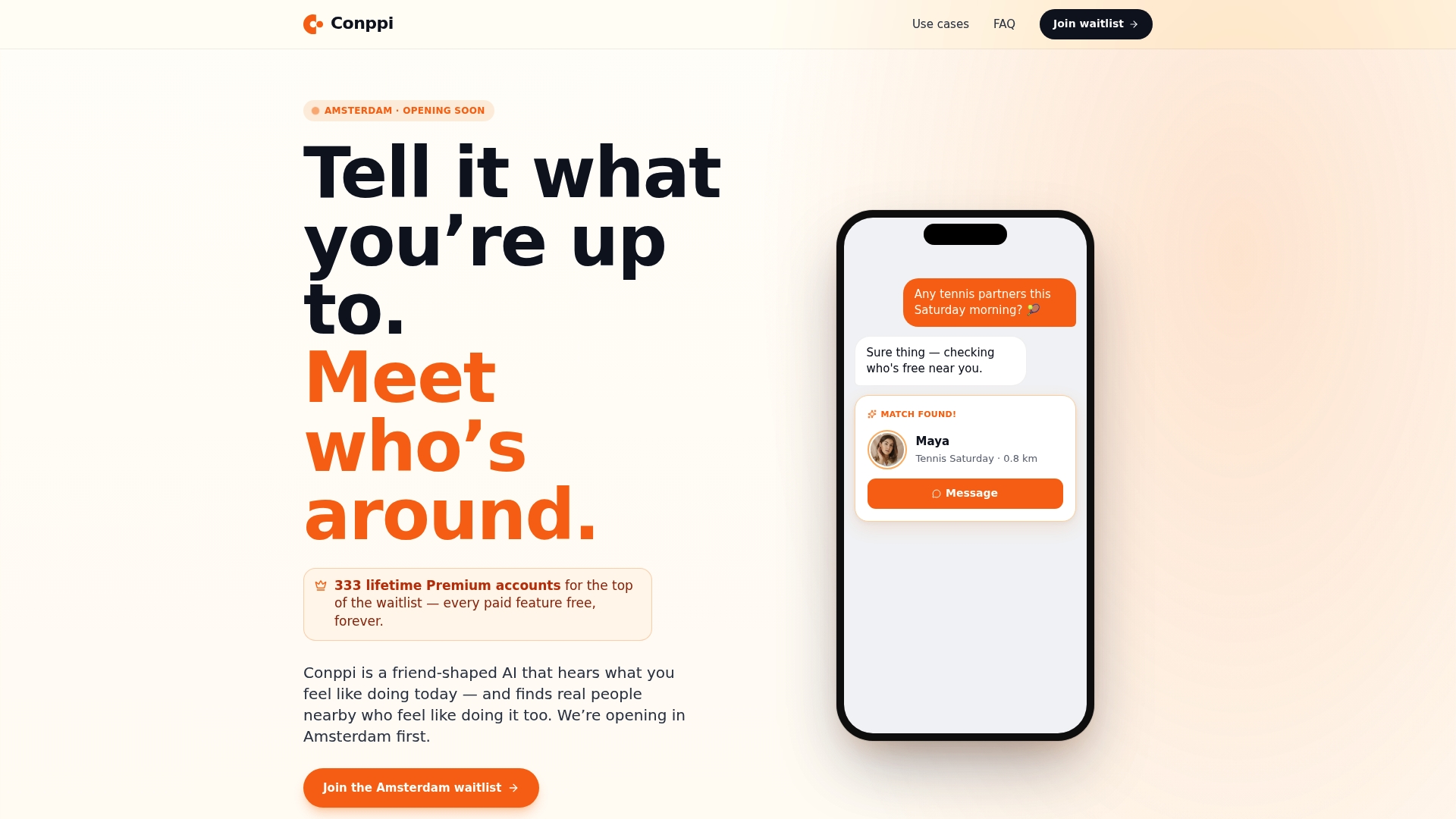
Because you match on the activity itself, the frame is set before you even meet. Someone joining a padel match or a co-working session already knows why you're both there, which cuts out the ambiguity this whole article has been untangling. The app skips profile browsing and swiping entirely, sharing only approximate distance for privacy, and lets you filter by skill level and timing so the people you meet actually match what you're looking for.
If you're trying to build platonic connections instead of decoding another confusing situationship, start with something concrete. Check the activity partner app for sports, co-working, and meetup options near you, and see who's free to grab coffee, hit the courts, or share a desk this week.
Sources
- Friends-first initiation prevalence and relationship initiation research (PMC article)
- Should you date someone you're friends with? | SELF
- Dear Tyler and Jay: What’s the difference between romantic and platonic attraction? – Johns Hopkins University Student Well-Being
- Science of friendship — APA Monitor