
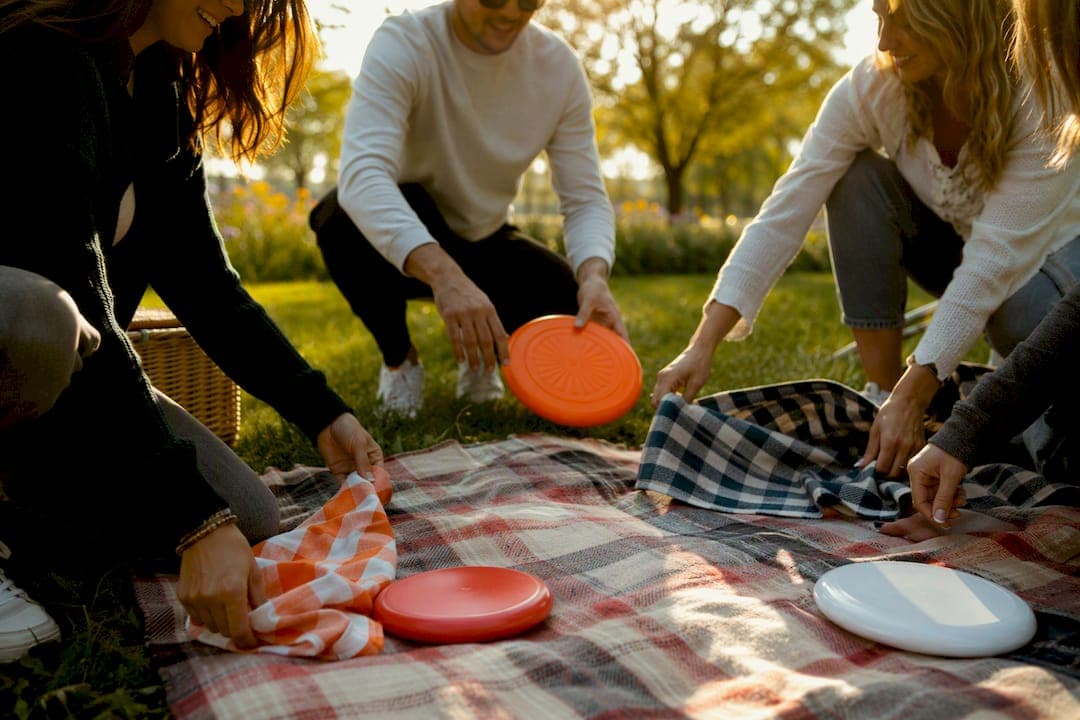
The two formats that consistently turn strangers into friends are curated gatherings of 4 to 6 people and recurring conversation-first groups that meet on a schedule. If you want results fast, download a curated matching app or host one structured coffee meetup this week using a simple checklist. Conppi's real-time matching is built for exactly this kind of low-stakes, small-group start.
TL;DR:
- Curated small-match groups of four to six people reduce uncertainty and increase repeat attendance compared to larger, unorganized events.
- Small activity-based meetups like walking, trivia, or shared meals efficiently lower social pressure and foster quick bonding among participants.
- Effective small-group organizing involves setting clear goals, keeping groups small, and maintaining a regular cadence to sustain long-term connections.
- Using specific filters and platform vetting ensures authentic, well-matched groups, with size and structure directly impacting participation and inclusion.
- Conppi's real-time matching simplifies spontaneous meetups, connecting nearby people for activities without scheduling or extensive planning.
Table of Contents
- What Kinds of Small Group Meetups Actually Exist
- Where to Find Small Group Meetups Near You
- Small Group Activity Ideas That Actually Work
- How to Join or Organize a Small Meetup, Step by Step
- Group Size and Facilitation: What the Research Actually Says
- Handling Conflicts and Difficult Group Dynamics
- Keeping a Small Group Together Long-Term
- Why Curated Small Groups Are the Better Bet for Making Friends
- Find Your Next Small Group Meetup With Conppi
- Sources
What Kinds of Small Group Meetups Actually Exist
Not every small gathering serves the same purpose, and picking the wrong type wastes a Saturday and your social energy. Before you RSVP to anything, figure out which category you're actually looking for.
Conversation-first recurring groups are built for steady friendship growth. Think book clubs, walking groups that meet every other Sunday, or a standing coffee meetup with the same five people. These work because familiarity compounds. You're not starting from zero every time, and that repetition is what turns "the people from that group" into actual friends. The tradeoff is patience. Nobody bonds deeply in one sitting.
Activity-first meetups trade slow-burn intimacy for speed. A pickup basketball game, a cooking class, a hiking meetup. Shared tasks give people something to focus on besides the awkwardness of talking to strangers, which lowers the social pressure fast. Matching the activity to the outcome you want matters here: conversation-based formats build connection, while hands-on tasks reduce the awkwardness that keeps new people from opening up. If your goal is a quick, low-anxiety bond, pick something with your hands busy and your mouth free.

Curated small-match gatherings solve a different problem entirely: the anxiety of not knowing who's showing up. Apps and services that assemble groups of 4 to 6 based on shared interests remove the guesswork. You're not walking into a room of 30 strangers hoping to find your people. Someone already found them for you. This model is gaining traction precisely because it helps people avoid feeling lost in bigger, looser events.
Virtual and hybrid small groups fill the gap when geography or scheduling won't cooperate. A weekly video call book club or a hybrid language-exchange group that meets online three weeks out of four still delivers the repetition that builds trust, just without the commute. It's not a substitute for in-person contact long term, but it's a legitimate bridge when life is chaotic.
Here's how the four stack up on effort, cost, and structure:
- Conversation-first recurring groups: low cost, moderate effort to organize, needs a loose host or rotating facilitator to keep momentum
- Activity-first meetups: moderate cost (gear, venue, class fees), low facilitation need since the activity does the work
- Curated small-match gatherings: often free or low-cost through an app, minimal effort since matching is automated, light facilitation helps but isn't required
- Virtual and hybrid groups: lowest cost, moderate effort to keep engagement up on camera, benefits from a dedicated facilitator more than any other format
The honest answer for most people chasing new friendships: start with curated small-match gatherings or activity-first meetups, then graduate into a recurring conversation-first group once you've found people worth seeing again.
Where to Find Small Group Meetups Near You
Finding the right event is less about luck and more about knowing which channels actually surface small, well-run gatherings instead of massive networking mixers where you'll talk to nobody twice.
Apps built specifically for small-group and activity matching are your fastest route. Search using specific terms rather than broad ones. "Coffee meetup," "co-working session," or "padel partner" pulls up narrower, more relevant results than a vague search for "social events." Look for filters on group size and recurring-event flags. A listing that says "weekly" or "biweekly" is signaling a conversation-first format; a one-time listing is usually activity-first. Conppi's real-time matching skips the browsing altogether and connects you directly with someone nearby who wants to do the same thing right now, whether that's a coffee, a co-working session, or a tennis match.
Local discovery still works, especially for people who prefer face-to-face vetting before committing. Community centers post activity boards. Co-working spaces run informal lunch groups. Hobby shops (climbing gyms, board game cafés, language schools) often host small recurring sessions for regulars. University and community bulletin boards, physical or digital, are underused goldmines for niche interest groups nobody bothers advertising elsewhere.
Don't overlook the channels you already have access to. Workplace Slack channels frequently have interest-based subgroups, from running clubs to book circles. Alumni networks run small regional meetups that skew toward genuine connection rather than transactional networking. Hobby newsletters, the kind you get from a local running store or a specialty coffee shop, often list small gatherings that never make it onto a general events app.
Vetting matters more for small groups than large ones, because you're committing real time to a tight circle. Before showing up:
- Check the host's profile or event history if the platform shows one
- Look for a stated group cap. If a "small meetup" has no cap, be skeptical
- Read reviews or past attendee comments when available
- Confirm the cost model upfront. Some are free, some ask for a per-person contribution toward venue or supplies, some run on a small recurring membership fee
A note on cost: curated apps and community boards skew toward free or near-free. Paid interest clubs and structured workshops run higher, sometimes $10 to $30 per session depending on materials or venue rental. Neither is inherently better. Match the cost to how much structure and vetting you want. Community platforms focused on local event coordination, like resources for connecting with local businesses, are increasingly filling the gap between big anonymous meetup boards and fully curated apps, giving organizers another channel to list small, focused gatherings.
Small Group Activity Ideas That Actually Work
The right activity depends on where the group is in its life. A brand-new group of strangers needs something different than five people who've already met twice.
- Coffee or casual drinks. The lowest-friction option that exists. No skill required, no equipment, and an easy exit if the chemistry isn't there.
- A short walk or hike. Side-by-side movement takes the pressure off eye contact and makes silence feel natural instead of awkward.
- Trivia night. Structured, low-stakes, and gives everyone a built-in reason to talk. Trivia and casual food or drink meetups require the least pre-event planning, which makes them a reliable first pick for new organizers.
- A food tour or potluck. Food gives people something to react to together, which beats forced small talk every time.
- Board game night. Works especially well for introverts, since the game structure carries the conversation.
- A book or discussion circle. Deeper connection territory. Requires people to show up having done something (read a chapter), which builds a small sense of shared commitment.
- A cooperative creative workshop. Pottery, painting, a group cooking class. Working toward a shared output builds trust faster than pure conversation.
- A charity build or volunteer shift. Shared purpose plus physical task equals fast bonding, though it needs a clear organizer to coordinate logistics.
- A mini escape room or puzzle challenge. Cooperative problem-solving under mild pressure reveals personality fast, in a way that flatters almost nobody and bonds almost everyone.
Low-friction options need almost no facilitation and cost little to nothing beyond the coffee itself. Deeper-connection activities need a bit more: a host willing to send a reminder, sometimes a small fee for materials or venue, and ideally a short debrief afterward. Hands-on activities like cooperative builds or puzzles only become real connection-builders when someone facilitates them and runs a short debrief afterward; without that closing conversation, they're just entertainment that ends when the activity does.
Pro Tip: Don't chase novelty. Running the same activity, like a standing Tuesday coffee or a monthly book pick, with the same small group across a few sessions builds familiarity faster than constantly switching formats. Familiarity is the actual engine behind friendship, not variety.
Low-friction activities work best as a first step; save the book circle or the cooperative workshop for after a group has already met once or twice and built a baseline of trust.
How to Join or Organize a Small Meetup, Step by Step
Whether you're showing up or running the show, a little structure removes most of the anxiety that keeps people from committing to a second meetup.
If you're attending:
- Check the host's profile, group size cap, and any reviews before RSVPing.
- Arrive five to ten minutes early rather than exactly on time. It's easier to greet people one at a time than to walk into a group already deep in conversation.
- Have two or three conversation openers ready. "What brought you to this?" works almost everywhere.
- Know your exit line in advance. "This was great, I've got to head out, let's do this again" is enough.
If you're hosting:
- Set one clear goal for the meetup (casual social, hobby-specific, professional networking) before you invite anyone.
- Cap the group at 4 to 6 people for a first-time gathering.
- Pick a venue that supports conversation. A loud bar fails; a quiet café or a park bench succeeds.
- Build a rough agenda with time blocks: welcome and quick intros (10 to 15 minutes), main activity (30 to 50 minutes), and a short wind-down (10 minutes) to talk about meeting again.
- Prepare one simple icebreaker prompt in case conversation stalls.
- Set a clear RSVP deadline and a simple cancellation policy so no-shows don't derail small numbers.
- Decide the cost split in advance and mention it in the invite. Nobody wants to negotiate a bill split with strangers.
A realistic timeline: send invites 5 to 10 days out, send one reminder 48 hours before, and send a final "see you there" the morning of. Budget-wise, expect $0 to $15 per person for coffee-style meetups and $15 to $40 for anything involving a class, workshop, or shared meal. Always publish a clear end time on the invite. A stated end time makes new attendees noticeably more comfortable committing, because it gives them a built-in exit if the group isn't a fit.
Follow-up decides whether a one-off event becomes a group. Send a short "great meeting you all" message within a day or two. Propose the next date before the group's energy fades, ideally within two to three weeks. Short, repeatable rituals beat one-off large events for building real long-term connection, so treat the follow-up message as part of the event, not an afterthought.
Group Size and Facilitation: What the Research Actually Says
The number that matters most in small-group planning is smaller than most people assume. Groups start fragmenting into side conversations once they pass 6 to 8 people, which means a "small" meetup of 10 or 12 often behaves like two disconnected cliques rather than one group. Four to six people is the range where everyone stays in one conversation without a facilitator forcing it.
The group-size effect: Once attendance climbs past 6 to 8, participation and satisfaction drop measurably as the group splits into smaller side conversations, according to research on group size and performance. A group of 4 to 6 keeps everyone in the same conversation without extra effort from the host.
The host's job isn't to run the room, it's to make sure nobody gets stranded. A host or a structured prompt system acts as a social safety net, and that structure meaningfully increases how included newcomers feel. That doesn't mean lecturing the group. It means light touches:
- Pair off newcomers for a two-minute intro before opening the floor to the whole group
- Rotate who gets asked questions so one person doesn't dominate
- Run a 10-minute check-in partway through if the group is meeting for an extended session
- Ask an open question directly to anyone who's gone quiet for a while
Inclusion also means practical accessibility. Check that the venue works for anyone with mobility needs, confirm dietary restrictions before a food-based meetup, and state any cost upfront so nobody feels blindsided. Agreeing on a couple of unspoken ground rules, no interrupting, no phones during the main activity, keeps things comfortable without anyone having to say it out loud. And always give people a clear, guilt-free way out: a stated end time, or a host who makes it easy to slip out early without an awkward goodbye tour.
Handling Conflicts and Difficult Group Dynamics
Every small group eventually hits friction. Someone talks over everyone else, two people clash over politics, or the energy just goes flat. What separates a group that survives this from one that quietly dissolves is usually the host's willingness to address it early, not the conflict itself.
Small size actually works in your favor here. With only 4 to 6 people, problems are visible immediately instead of getting buried in a crowd. If one person is dominating conversation, a facilitator can redirect with a direct question to someone quieter, no confrontation needed. If two people are clashing, a quick one-on-one conversation after the meetup usually resolves more than trying to referee it live in front of the group.
Some patterns to watch for: the "monopolizer" who needs a rotating-turn structure to rein in, the "ghost" who shows up but never engages (often solved with a direct, low-pressure question), and the mismatched-expectations problem, where one person came for deep connection and another wanted pure entertainment. That last one usually traces back to the host not setting a clear goal upfront.
When a group genuinely isn't working, don't force it. Some combinations of people just don't click, and that's fine. Better to end a mismatched meetup gracefully and reform with a different mix than to keep dragging a group that's lost its energy.
Keeping a Small Group Together Long-Term
Most small groups don't fail because of conflict. They fail because nobody sent the second invite. Momentum dies quietly, not dramatically, so protecting it needs to be deliberate.
The single biggest lever is cadence. A group that meets every two to three weeks stays warm; a group that goes quiet for two months has to restart from scratch. Regular, short check-ins between bigger sessions help maintain momentum and keep people coming back. That can be as small as a group chat message asking how everyone's week went.

Rotate hosting duties once a group has met a few times. It spreads the effort and gives the group a sense of shared ownership instead of depending on one person to keep it alive. Mix in a little variety without abandoning the format that's working. If coffee meetups are the anchor, throw in an occasional walk or game night, but don't reinvent the group every time.
Celebrate small milestones. Marking a group's one-year anniversary, or just acknowledging "this is our tenth meetup," gives people a reason to stay invested beyond the individual sessions. Groups that last are the ones that feel like they're building something, not just repeating an event.
Why Curated Small Groups Are the Better Bet for Making Friends
The strongest argument for the 4 to 6 person curated model isn't theoretical. It's that most social anxiety around meetups comes from uncertainty, not the activity itself. Not knowing who'll show up, whether you'll fit in, whether it's worth the effort to attend. Curated matching removes that uncertainty by design, pairing people around a shared, specific interest before anyone walks in the door.
That's also why repeat attendance tends to be higher in small, matched groups than in open, large-scale events. Open events ask a stranger to gamble an evening on an unknown room. A curated group of five people who all wanted the same activity is a much smaller bet, and it pays off more often. This is the logic behind why curated matching for activities like co-working sessions works better than posting to a general bulletin board and hoping the right people show up.
Building an app around this insight means treating group size as a design constraint, not an afterthought. Every filter, every matching rule, exists to keep the experience closer to five people who actually want to be there than fifty who might.
— Ilya
Find Your Next Small Group Meetup With Conppi
Conppi matches you in real time with people nearby who want the same thing you do, whether that's a coffee meetup, a co-working session, a padel match, or a language exchange. There's no swiping, no profile-building, and no guessing who'll show up. You set the activity, Conppi finds the person, and your exact location stays private since it only shares approximate distance.
If you've been putting off organizing a meetup because the planning felt like too much work, this is the shortcut. Skip the group chat logistics and the event listing altogether. Open the app, pick your activity, and see who's available right now. Start with something low-stakes, like meeting someone for coffee near you, and let the next meetup grow from there.
Sources
- Small group team building: The complete 2026 guide (FullTilt Teams)
- Group size and its effects on group performance and group member satisfaction (ResearchGate)