

The fastest way to turn an idea into a real meetup is to pick one activity, pick a time within the next one to two hours, and send a one-line invite. Quick walks, coffee catch-ups, park games, pop-up market crawls, skill swaps, and casual pickup sports all work well because they need little setup. Research on social bonding, including a PLOS One study on secular rituals, backs the idea that short, repeated get-togethers build connection fast, and apps can help you find a nearby partner if you have no one lined up.
TL;DR:
- Spontaneous meetups work best when choosing low-gear activities like walking, coffee, or park games that require minimal setup and can start within an hour.
- Matching activity ideas to group size and energy level helps ensure they are appropriate, with options for solo, small groups, or larger gatherings.
- Sending a one-line, time-limited invite and requesting estimated arrival times increases the likelihood of quick responses and reduces waiting.
- Public spaces such as parks, libraries, and open markets are reliable default venues because they are free, accessible, and require no reservations.
- Apps like Conppi facilitate instant connection by matching people nearby interested in the same activity within the next hour, eliminating the need for profiles or extensive planning.
Table of Contents
- Spontaneous meetup ideas sorted by group size and energy
- How to plan a spontaneous meetup in under 30 minutes
- Keeping spontaneous meetups safe, accessible, and cheap
- How Conppi removes the friction of finding a partner
- Respecting local rules at impromptu gatherings
- Why small rituals build real local ties
- Try Conppi when you want a partner without the search
- Sources
- FAQ
Spontaneous meetup ideas sorted by group size and energy
The hardest part of any last-minute plan is matching the idea to who you actually have available. Sort by group size and energy level first, then pick the specific activity.
Solo-to-pair ideas:
- Coffee or tea at a local shop, good for a 30 to 45-minute window and costs little.
- A short walk through a nearby park or neighborhood, free and easy to extend or cut short.
- A quick browse through a secondhand bookstore or record shop, low pressure and conversation-friendly.
Small-group, low-energy (3 to 6 people): 4. Picnic with whatever snacks people already have at home, split the cost or everyone brings their own. 5. Board game or card game session at someone's place or a café that allows it. 6. A casual language exchange over drinks, good for mixed-background groups.
Small-group, high-energy (3 to 6 people): 7. Frisbee, spikeball, or a kickabout in a park, needs almost no gear beyond one ball or disc. 8. A short bike ride to a nearby viewpoint or market. 9. Pickup basketball or tennis at a public court, bring a racket or ball if you have one spare.
Larger-group (7 or more): 10. A pop-up market or street food crawl, works well because people can drift in and out. 11. Group trivia night at a pub that already hosts one. 12. An outdoor movie or sports screening at a public square or bar with a big screen.
Date-friendly spontaneous ideas: 13. A walk followed by dessert somewhere new to both of you. 14. A visit to a small gallery or pop-up exhibition, gives you something to talk about besides small talk.
Creative or skill-share pop-ups: 15. A 20-minute photo walk where everyone shares one favorite shot after. 16. A quick cooking or baking swap, everyone brings one ingredient and you figure out the dish together.

Public libraries, parks, and open markets are worth defaulting to because they are free, flexible, and rarely require a reservation. A pop-up market crawl or a park games session also builds in natural stopping points if someone can only stay briefly.
Ready-to-send invite lines save you from overthinking the message:
- "Coffee in 45? I'm free until 6."
- "Park frisbee in 30, bring a disc if you've got one."
- "Quick walk and catch-up, leaving in an hour, you in?"
- "Trivia night just started forming, come through if you're free."
- "Board games at mine in 20, bring snacks if you want."
- "Photo walk in 15, just need your phone and comfortable shoes."
Pro Tip: Keep the invite to one line and one question. A shorter message gets a faster yes or no.
How to plan a spontaneous meetup in under 30 minutes
Three simple playbooks cover most situations, depending on how much lead time you have.
- 15-minute: pick one idea from a short mental list, text two or three people the one-line invite, name a single meeting spot, and confirm once someone replies.
- 30 minutes: repeat the 15 minute steps, then add a weather or venue backup (indoor café if it rains, alternate park entrance if one is crowded), and ask for a rough ETA from each person.
- 90 minutes: gather a slightly larger group, assign one person as time-keeper to keep things moving and one as host to greet latecomers, and share the plan with someone not attending in case plans change.
Ask people to reply "yes" or "no" with an estimated arrival time rather than a vague maybe. That one habit cuts down on the awkward waiting game.
Pro Tip: When you don't have enough people in your contacts, an activity-specific matching tool or a local event page can fill the gap faster than posting in a group chat and waiting.
Keeping spontaneous meetups safe, accessible, and cheap
A few habits make last-minute gatherings smoother without adding real planning time.
- Choose a public meeting point with good lighting and foot traffic, especially for a first-time meetup with someone new.
- Tell one person not attending where you're going and roughly when you expect to be done.
- Make opting out easy by phrasing invites as open questions, not pressure.
- Pick ground-floor or step-free venues when anyone in the group has mobility needs, and build in a transport buffer of 10 to 15 minutes.
- Default to free venues like parks and plazas, ask people to bring their own snacks, and use a payment-splitting app or cash for anything shared.
Public spaces are a reliable default. Dutch government guidance points to libraries and parks as established, often free, hubs for community and social activity, which makes them a safe first choice when you're deciding where to meet on short notice.
How Conppi removes the friction of finding a partner
Conppi connects people nearby who want the same activity right now, whether that's tennis, a coffee catch-up, or co-working, without profiles or swiping to slow things down.
- Matching is based on activity and timing, not a dating-style browse.
- Only approximate distance is shared, which keeps the first contact low-pressure.
- A user looking for a running partner on a Tuesday evening could open the app, get matched with someone nearby also free that hour, and be jogging together within the hour.
Respecting local rules at impromptu gatherings
Public parks, squares, and plazas are generally open for casual use, but larger groups or anything involving amplified sound, alcohol, or a fixed structure like a tent can fall under local permit rules that vary by city and even by specific park. Checking a municipality's website before a larger gathering takes a few minutes and avoids a conversation with security or police later.
Noise ordinances usually apply after a certain evening hour, so an impromptu gathering that starts at 9 PM in a residential-adjacent park deserves more caution than the same plan at 3 PM. If your meetup is likely to draw attention, a quick message to a local community page or neighborhood group can flag the plan and head off complaints.
Markets, shopping areas, and private venues like cafés and bars set their own house rules, and most will ask a large group to move along or split up if they're blocking foot traffic. The simplest guideline is to treat shared space the way you'd want a stranger's group to treat it: leave no trace, keep noise reasonable, and move if asked.

Why small rituals build real local ties
Research on collective movement and cohesion suggests that walking or moving together builds bonds faster than sitting still. Try a two-week cadence of short meetups and watch the effect build.
— Ilya
Try Conppi when you want a partner without the search
Conppi exists for exactly this problem: finding someone nearby who's free right now for the same activity you are, without the back-and-forth of group chats or dating-style profiles.
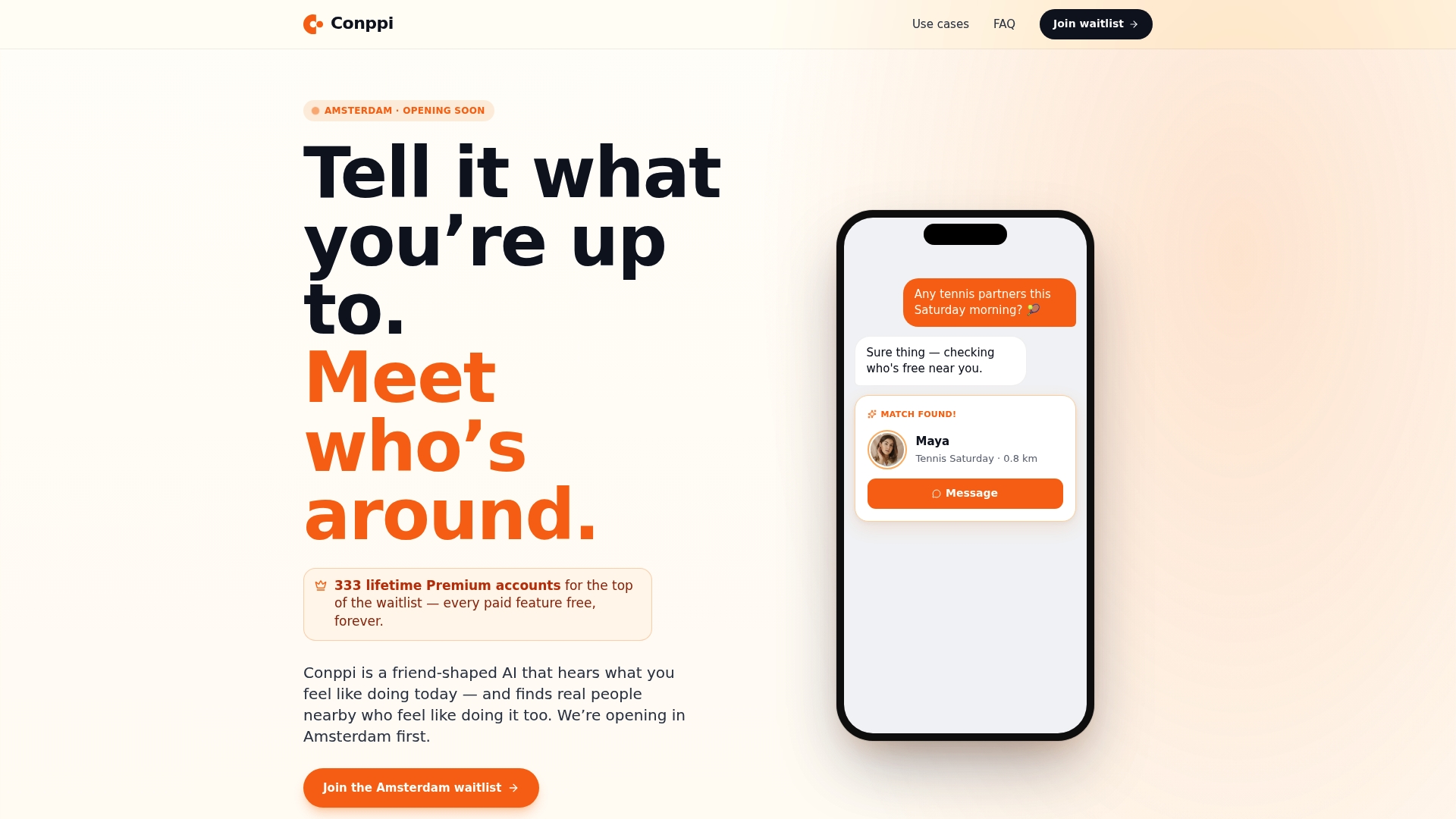
If you want to skip the search for people to invite, check out the Conppi activity partner app and see who's nearby and free today.
Sources
- United on Sunday: The effects of secular rituals on social bonding and affect | PLOS One
- Traveling groups stick together: How collective directional movement influences social cohesion — SAGE Journals
- Government
FAQ
What are examples of spontaneous activities?
Common examples include a short walk, coffee at a nearby café, park games like frisbee or spikeball, a pop-up market crawl, or a quick skill swap like cooking together. The best spontaneous activities need little gear and can start within an hour of the invite.
What is the most spontaneous thing to do?
There's no single answer, but activities that require almost no setup, like a walk, a coffee catch-up, or pickup sports at a public court, tend to work best for true last-minute plans. Picking something with a fixed, short time window makes it easier for others to say yes.
What are some spontaneous things I can do on a date?
A walk followed by dessert somewhere neither of you has tried, or a stop at a small gallery or pop-up exhibition, both work well because they give you something to react to together. Keeping the plan under two hours also makes it easy to extend if things are going well or wrap up naturally if not.
How do I organize a spontaneous meetup quickly?
Pick one idea, choose a time within the next one to two hours, and send a one-line invite naming the activity and meeting spot. Ask people to reply "yes" or "no" with an estimated arrival time so you're not left waiting on a vague maybe.