

Lap swim etiquette is the set of unwritten rules that keep shared lanes safe and conflict-free, and the single most important one is this: match your pace to the lane you choose, stay predictable, and yield at the turns. Everything else, from entering a lane to passing a slower swimmer, follows from that one habit. Below is exactly how to apply it.
TL;DR:
- Use split lane swimming for two people and counterclockwise circle swimming for three or more, agreeing on the change as soon as another swimmer joins.
- A toe tap is recognized in organized club settings, but it may startle public pool swimmers; when unsure, ask verbally at the wall.
- Rest in a lane corner rather than the center, and move to the wall’s edge immediately if you need to stop unexpectedly.
- A fourth swimmer can usually join three people circling; with more than four or five in the lane, replace long sets with shorter repeats.
Table of Contents
- Choosing a Lane: How to Read Speed Before You Get In
- Entering a Lane Without Causing a Collision
- Split-Lane vs. Circle Swimming: Picking the Right System
- Passing Safely Without Startling Anyone
- Turns and Rest Stops: Where to Stop and Where Not To
- Swimwear and Goggles: What Actually Belongs in the Pool
- Pool Rules That Keep Lap Sessions Running Smoothly
- Common Lane Mistakes and Quick Fixes
- Dos and Don'ts Checklist for Lap Swim Sessions
- Talking to Swimmers You Don't Know
- When Every Lane Is Full
- Fitting a Workout Into a Shared Lane
- Why a Regular Swim Partner Makes Lane Conflicts Rare
- Find a Consistent Swim Partner with Conppi
- FAQ
- Sources
Choosing a Lane: How to Read Speed Before You Get In
Before you get in, watch for thirty seconds. Stroke rate, how long someone rests at the wall, and whether they're doing continuous laps or broken sets all tell you more than a posted sign ever will.
- Pick an empty lane first if one is available, no questions needed.
- If every lane is occupied, choose the one whose visible pace most closely matches yours.
- Watch one full length before deciding. A swimmer gliding in for a long rest swims slower than their stroke suggests.
- Treat posted labels like "slow," "medium," and "fast" as a starting point, not gospel. Actual traffic in the lane overrules the sign.
If the labeled lane doesn't match what you see, trust your eyes. A "fast" lane with casual swimmers taking long breaks is not actually fast, and forcing your way in because of a sign creates more friction than it solves.
Entering a Lane Without Causing a Collision
Getting into an occupied lane safely comes down to timing and a quick, polite exchange.
- Sit on the edge or dangle your feet in the water so the swimmers inside can see you're waiting.
- Wait for a natural break, ideally when the lane is empty for a moment or a swimmer pauses at the wall.
- Make eye contact or wait until they stop, then ask if you can share the lane.
- Let the current swimmer pick which side they'll take. They were there first, so follow their choice rather than assigning yourself a side.
- During busy sessions or when a facility posts specific lane rules, check with a lifeguard before jumping in. Staff often know which lanes are overloaded.
A few seconds of waiting at the wall prevents nearly every awkward in-lane encounter.
Split-Lane vs. Circle Swimming: Picking the Right System
Two systems handle traffic once a lane has more than one swimmer, and choosing the wrong one is a common source of near-misses.
- Split-lane swimming works with two swimmers: each person claims a side (left or right) and sticks to it for the entire session, passing on the same side every length.
- Circle swimming suits three or more swimmers: everyone moves counterclockwise, swimming down one side and returning on the other, following the person ahead rather than racing them.
- When a third swimmer joins a split lane, say so out loud. Something like "should we circle now?" avoids confusion.
- Agree on the system within the first minute. A fifteen-second conversation at the wall prevents head-on collisions for the rest of the session.
Passing Safely Without Startling Anyone
Overtaking a slower swimmer is routine, but doing it blindly causes most lane accidents. A light tap on the ankle or foot, known as the toe-tap, is a recognized signal for requesting a pass in organized club and masters settings. In a casual public pool, though, the same tap can confuse or startle someone who has never swum with others. When you're unsure whether the person ahead knows the signal, wait until the wall and ask out loud instead.
Pass on the opposite side from the swimmer you're overtaking, and never cut across their path mid-length. If you're the one being passed, ease toward your side of the lane and let the faster swimmer through without breaking stride.

Pro Tip: When in doubt, skip the toe-tap and just say "passing on your left" at the wall. It takes two seconds and removes all guesswork.
Turns and Rest Stops: Where to Stop and Where Not To
Where you pause matters as much as how long you pause. Masters Swimming.
- Rest at the corner of the lane, never dead center, so turners have clear space to rotate.
- Push off at an angle that keeps you in your established side, not drifting into the oncoming lane.
- If you cramp or need to stop suddenly, move to the wall's edge immediately rather than floating in the middle.
- Signal a longer stop (adjusting goggles, catching your breath) by staying low and to the side so others can see you're not mid-turn.
A swimmer who rests predictably in the corner barely interrupts anyone's rhythm.
Swimwear and Goggles: What Actually Belongs in the Pool
Fitted swimwear matters for more than comfort. Swim England guidance notes that heavy or baggy clothing, including denim or wool, can become waterlogged or caught in pool filters, and most facilities restrict what's allowed for exactly that reason. Lycra or polyester swimwear designed for the pool is the safer standard almost everywhere.
Goggles are a fit problem before they're a brand problem. According to Swim England's goggle guide, the seal around your eye socket, not the tightness of the strap, determines whether goggles work. Press them gently against your face without the strap: a brief suction hold means a good seal, and if you need to crank the strap tight to stop leaking, they're the wrong shape. Check nose-bridge comfort, strap adjustability, and anti-fog or UV coating if you'll swim outdoors.
If you're using a kickboard, fins, or pull buoy, move to a lane with enough room for the wider kick or splash pattern. Training aids are common, but they change your footprint in the water, and a lane built for straightforward lap swimming may not fit them.
Pool Rules That Keep Lap Sessions Running Smoothly
Basic facility rules exist to support etiquette, not slow you down. Shower before entering, follow lifeguard instructions, and never dive into shallow lanes marked for lap swimming. If someone's behavior feels unsafe, a polite word first ("hey, mind giving a bit more space?") solves most issues. If it doesn't, bring it to the lifeguard or front desk rather than escalating poolside. Keep kickboards, fins, and bags out of walkways between lanes so no one trips reaching for a towel.
Common Lane Mistakes and Quick Fixes
A few habits cause most lane friction, and all of them have a simple fix.
Starting a new lap the instant someone else begins their turn forces a collision course. Wait two seconds and watch where they're headed first. Standing in the center of the lane to catch your breath blocks the turning zone; shift to the corner instead. Picking a lane two speed levels off from your own creates constant passing pressure in both directions, so reassess after one length rather than staying out of pride. If the same conflict repeats across multiple sessions in the same lane, the simplest answer is often to swim at a different time or pick a different lane rather than trying to fix the dynamic every visit.

Dos and Don'ts Checklist for Lap Swim Sessions
Print this or save it to your phone before your next session.
- Do watch a lane for thirty seconds before entering.
- Do wait at the wall and ask before joining an occupied lane.
- Do rest in the corner, not the center.
- Do pass on the opposite side and announce it verbally if unsure.
- Do keep a steady, predictable pace throughout your set.
- Don't assume a posted lane label overrides what you actually see.
- Don't toe-tap a stranger without knowing if they recognize the signal.
- Don't block the wall or center during turns.
- Don't bring fins or a kickboard into a lane too narrow for them.
- Don't wear street clothing or unfitted swimwear in the pool.
Talking to Swimmers You Don't Know
Most lane communication happens without a word. A raised hand at the wall, a nod before pushing off, or simply slowing your kick as someone approaches all signal the same thing: awareness of the other person. These small, non-verbal cues do more to prevent collisions than any sign on the pool deck.
When words are necessary, keep them short and neutral. "Mind if I share?" "Passing on your left." "All yours," said while stepping aside at the wall, covers almost every situation you'll run into. Tone matters more than wording. A flat, friendly request lands better than anything that sounds like a correction, even when you're genuinely annoyed about being cut off.
Not every swimmer will respond the same way. Some will nod and keep going; others might not notice you at all, especially with earplugs or music in. Give it a second attempt at the next wall before assuming you're being ignored. If a swimmer clearly isn't picking up on cues, a brief, specific request works better than repeated subtle signals: "Can I jump in with you? I'll take the right side." Directness, delivered politely, resolves more lane conflicts than persistence with hints ever does.
The goal isn't to become friends with every stranger in your lane. It's to exchange just enough information, pace, direction, intent, to swim the same water without colliding.
When Every Lane Is Full
Crowded sessions, usually early morning or right after work, change the math on lane choice. When nothing is open, look for the lane with the smallest speed gap to your own rather than waiting indefinitely for an empty one. A brief conversation at the wall ("would you mind if I joined for twenty minutes?") usually gets a yes, especially if you're clear about sharing rather than taking over.
If a lane already has three swimmers circling, a fourth can usually join without much disruption as long as everyone keeps the same rotation. Beyond four or five, consider whether the workout you had planned still fits. Long, uninterrupted sets get harder to execute safely once a lane is genuinely crowded, and shorter, broken repeats with more wall time might be the more realistic plan for that session.
If no lane works at all, ask the lifeguard whether a general swim area or diagonal lane split is available during peak hours. Many facilities open extra space temporarily when demand spikes, even if it isn't on the regular schedule. Waiting a few minutes for a swimmer to finish is often faster than circling the pool deck looking for an opening that won't appear.
The least disruptive option, when a lane is tight and your schedule has flexibility, is simply to shift your session by thirty minutes. Pools are rarely crowded at exactly the same density for more than an hour at a stretch.
Fitting a Workout Into a Shared Lane
Structured workouts, intervals, sets with rest periods, pull work with equipment, are harder to run in a shared lane than a continuous swim, but they're still possible with a bit of planning. Keep rest periods short and move to the corner immediately when you stop, so the wall stays clear for anyone mid-turn. If your intervals involve a long pause between repeats, let your lane partner know roughly what to expect: "I'm doing fifty-yard repeats with twenty seconds rest" tells them when you'll be stationary and when you'll push off.
Avoid starting an interval the moment another swimmer is mid-turn in front of you. A two-second pause to let them clear the wall costs you almost nothing and prevents a collision at the exact point where visibility is lowest. If your set requires equipment, fins for kick sets or a pull buoy for upper-body work, be upfront about the extra space you'll need, since both change your profile in the water.
When your workout genuinely needs more room than a shared lane allows, long, fast continuous sets, extended fly sets, anything requiring a full unobstructed length, it's often better to ask for a dedicated lane during off-peak hours rather than forcing a busy session to accommodate it. Most lifeguards will tell you honestly whether that's realistic given the day's traffic. Matching your workout's demands to the lane's actual capacity, rather than the other way around, is what keeps a structured session from becoming everyone else's problem.
Why a Regular Swim Partner Makes Lane Conflicts Rare
Most lane friction comes from mismatched expectations between strangers. A regular partner already knows your pace, your rest intervals, and how you like to split the lane, so there's nothing left to negotiate at the wall. If you're looking for someone to swim with consistently, our guide to finding a swim partner covers practical ways to connect with people who share your schedule and pace.
— Ilya
Find a Consistent Swim Partner with Conppi
Our app matches you with people nearby who want to do the same activity you do, swimming included, without profiles, swiping, or awkward small talk. Once you've got a regular lane partner, pace and lane-sharing stop being a negotiation every single session.
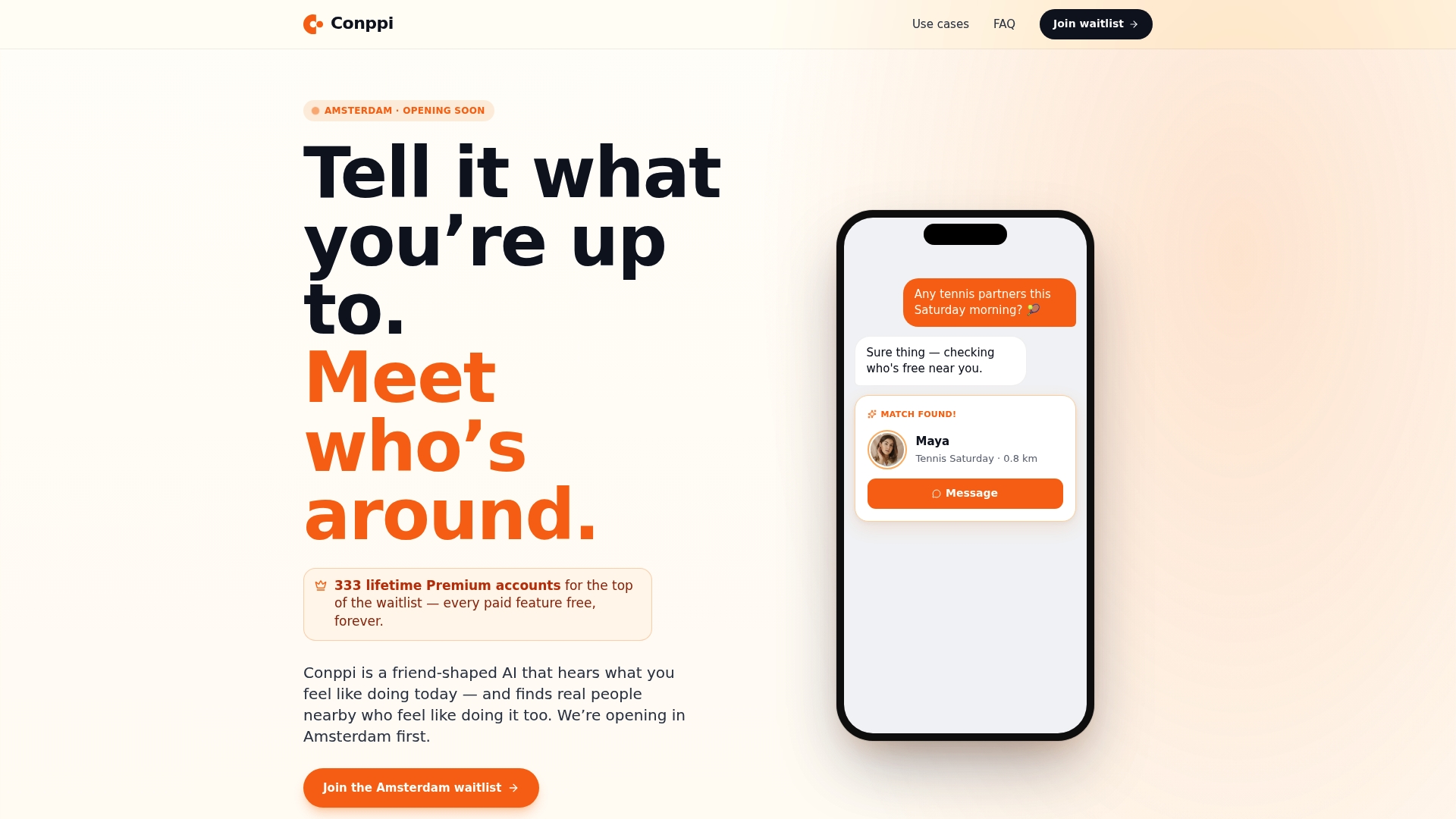
If repeated etiquette friction with strangers is wearing on your sessions, finding one or two consistent swim partners solves it at the source. Visit our activity partner app page to see how matching works, or check networking meetups if you're also looking to connect beyond the pool.
FAQ
What are the etiquette rules for lap swimming?
The core rules are to choose a lane matching your pace, signal before entering an occupied lane, agree on split-lane or circle swimming, pass politely at the wall or verbally, and rest at the corner rather than the center. Following coaching guidance on predictability by keeping a steady, consistent pace prevents most collisions.
What is the 80/20 swimming rule?
It describes how to structure a workout's intensity, not pool etiquette.
What should you wear to lap swim?
Fitted swimwear such as lycra or polyester is recommended, since heavy or baggy fabric like denim or wool can become waterlogged or caught in pool filters. Goggles that create a light seal without an overly tight strap, following proper fit guidance, round out appropriate lap swim gear.
What is the proper way to swim laps in a shared lane?
Keep a predictable, steady pace, stay on your assigned side in a split lane or follow the counterclockwise rotation in circle swimming, and rest at the corner instead of blocking the center. If you need to pass, do it safely on the opposite side and confirm with a verbal request at the wall if you're unsure the other swimmer will notice a toe-tap.
What should I do if a lane etiquette conflict keeps repeating?
A polite verbal request usually resolves it the first time, but if someone repeatedly ignores shared lane norms or creates unsafe conditions, raise it with pool staff or a lifeguard rather than confronting them further. For recurring issues at a managed facility, documenting the pattern, similar to how violation letters formalize repeated rule breaks in other shared spaces, can help staff address it consistently.
Sources
- Swimwear guidance for the pool | Feel comfortable in your swimwear
- Pool etiquette 101: The 7 commandments of lane swimming
- Lane etiquette | U.S. Masters Swimming