
Yes, meeting people at the gym works best when you keep it activity-first: join a recurring class, offer a quick spot or a rep count, and follow up within a day or two if it clicks. Short, contextual exchanges beat long introductions, and a field experiment found that tandem workout arrangements raised attendance significantly compared to solo routines. Activity-first social matching apps can speed up the follow-up step once you have made that first connection.
TL;DR:
- Weekly group classes, small group training, and fixed workout times create repeat encounters; regulars can recognize one another within a few sessions.
- Ask a brief, relevant question after a set, and read cues: headphones and downcast eyes signal that someone does not want to talk.
- A field experiment found that people in tandem workout arrangements attended more consistently than those exercising alone, supporting the value of a repeat partner.
- After a good session, propose the same day and time next week; a standing appointment builds familiarity better than one long conversation.
- For a first app meetup, choose a public gym floor, set clear start and end times, and share only approximate location.
Table of Contents
- Do's and don'ts for approaching people respectfully
- Where you're most likely to meet people at the gym
- Scripts and icebreakers you can actually use
- Gym etiquette, privacy, and staying on the right side of house rules
- Using activity-first apps to find gym buddies
- Turning a gym hello into a lasting friendship
- Finding gym social events and communities
- Overcoming social anxiety at the gym
- Why workout friendships are worth the small effort
- Let Conppi help you turn one gym chat into a regular session
- FAQ
- Sources
Do's and don'ts for approaching people respectfully
Most gym friendships start with a small, low-risk gesture rather than a conversation. The goal is to signal friendliness without interrupting someone's set or invading their space.
A few habits make the difference between welcome and unwelcome:
- Make brief eye contact and smile before speaking, especially near shared equipment.
- Ask a specific, contextual question ("How many sets do you have left on this bench?") instead of an open-ended one.
- Say a quick thank you after someone spots you or passes a weight, then let the moment end naturally.
- Skip unsolicited form corrections unless someone asks directly for feedback.
- Avoid repeatedly following someone between machines or classes, which reads as pressure rather than interest.
Reading body language matters as much as what you say. Headphones in and eyes down usually mean "not now." A towel draped over a machine or a glance at the clock between sets often signals a short window for a quick word. Someone scrolling their phone between sets without headphones is often more open to a brief exchange than someone mid-set with earbuds in.
Pro Tip: Ask for one small thing, like a spot, a water break cover, or a quick equipment swap. Small asks lower social risk for both people and open the door to a real conversation.
Where you're most likely to meet people at the gym
Some areas of a gym naturally produce more conversation than others, and knowing where to focus your energy saves time and awkward guesswork.
- Group classes: Attending the same class weekly builds familiarity fast, since regulars start recognizing each other within a few sessions, which makes a post-class "see you next week?" feel natural rather than forced.
- Small-group training or workshops: These sessions, often posted on gym bulletin boards or apps, create shared effort and built-in downtime for conversation between sets.
- Free-weight areas: Offering to spot someone or asking to work in between their sets is a standard, welcomed script in most gyms.
- Cardio rows and lanes: A quick comment about pace or machine availability works better than a personal question, since people here are usually mid-effort.
- A fixed schedule: Working out at the same time and day each week increases the odds of seeing the same faces, which turns one chat into a recognizable routine.
Scripts and icebreakers you can actually use
Context-based openers work because they reference something both people can see, which removes the guesswork of a cold introduction.
- Near the squat rack: "Mind if I work in between your sets?"
- In a class lobby: "Is this class always this full, or is today unusual?"
- At the water fountain: "That was a brutal set. How long have you been coming to this class?"
- After spotting someone: "Nice lift. Are you training for anything specific?"
- To schedule a repeat session: "I'm usually here Tuesday mornings if you want a training partner."
- A graceful exit when there's no reciprocation: "No worries, have a good workout" said with a nod and a return to your own routine.
Gym etiquette, privacy, and staying on the right side of house rules
Most gyms post house rules covering phone use and filming, and these exist to protect everyone's comfort, including yours. Many facilities restrict filming without consent and expect members to ask before pointing a camera at someone else's workout, a norm reflected in Dutch gym reporting on filming practices.
- Ask before filming anyone, even in the background of your own clip.
- Wait for a natural pause, like the end of a set or a water break, before approaching someone.
- If someone films you without permission, ask them directly to stop or delete the footage, then alert staff if they refuse.
- Keep conversations near your own station rather than trailing someone across the floor.
Perceived "groupness" during a class predicts greater enjoyment and positive recall of the workout, according to research on fitness class social dynamics. Gyms that feel socially comfortable tend to see people come back more often, which is part of why respecting these norms pays off for everyone.
Using activity-first apps to find gym buddies
An activity-first approach, where the shared workout comes before any personal exchange, removes most of the guesswork around meeting someone new. Posting a session and following up within 48 hours keeps the interaction focused on the activity rather than a drawn-out introduction.
A short safety checklist for using any activity app:
- Share only approximate location until you've met in person a few times.
- Choose a public, well-lit gym floor or class for a first session.
- Set a clear start and end time so the first meetup stays low-pressure.
Emotional support from an exercise companion predicts stronger self-efficacy and adherence to a workout routine, which is the practical reason a repeat partner matters more than a one-off chat.
Pro Tip: Turn one good session into a standing slot by proposing the same day and time next week before you leave the gym.
Turning a gym hello into a lasting friendship
A single good conversation rarely becomes a friendship on its own. What moves it forward is repetition: the same class, the same time slot, or a standing training appointment that puts you in front of the same person often enough for familiarity to build.
Once you've exchanged a few words more than once, suggest something slightly outside the gym, like a post-workout coffee or a shared meal prep session. These low-stakes extensions test whether the connection extends past shared equipment without the pressure of a formal "hangout" invite. Case studies on building sports connections through apps describe this same pattern: short gym sessions that repeat over a few weeks tend to turn into genuine friendships more reliably than one long conversation.
Consistency matters more than intensity here. Showing up to the same Tuesday class for a month builds more trust than one deep conversation followed by silence. If a workout partnership starts to feel one-sided, a simple check-in, like confirming the next session by text, keeps the arrangement alive without requiring grand gestures.

Finding gym social events and communities
Most gyms run some kind of community programming beyond the standard class schedule, from themed workout challenges to seasonal social mixers, though these are often under-promoted compared to regular classes — digital tools like a digital stamp card for gyms can help operators boost retention and promote local events effectively. Checking the front desk, the gym's app, or a bulletin board near the entrance usually surfaces more than the class timetable alone shows.
Small-group training cohorts and multi-week challenges (strength blocks, running clubs tied to the gym, nutrition workshops) tend to produce more conversation than drop-in classes, since the same group commits to a fixed schedule for weeks at a time. Some gyms also host staff-led social runs or group hikes outside normal hours. Asking a trainer directly whether the gym runs any member events is often faster than searching for a posted schedule, since not every gym advertises these consistently.
Overcoming social anxiety at the gym
Worrying about how an approach will land is common, and the fix is usually to lower the stakes of the first move rather than push through the anxiety head-on. A one-line, context-specific question carries far less risk than an open-ended introduction, because it gives the other person an easy, low-commitment way to respond.
Rehearsing a single script, like asking to work in on a machine, removes the need to improvise in the moment. Starting with the same low-pressure class or time slot each week also helps, since familiarity with the room and routine frees up mental space to notice and talk to people. If a conversation doesn't go anywhere, treating it as neutral information rather than rejection keeps the next attempt easier than the last.
Why workout friendships are worth the small effort
I keep coming back to one idea: social workouts aren't just more fun, they're more durable. A tandem gym habit holds up on the days motivation doesn't. Pick one context-led opener and try it this week, then show up to the same class twice before judging whether it worked. Respect the no's as readily as the yes's, and keep every approach activity-first.
— Ilya
Let Conppi help you turn one gym chat into a regular session
We built our app around the pattern that works best for gym friendships: post an activity, meet up, and follow up within 48 hours if you want to go again. No swiping, no profile pressure, just a shared workout as the starting point.
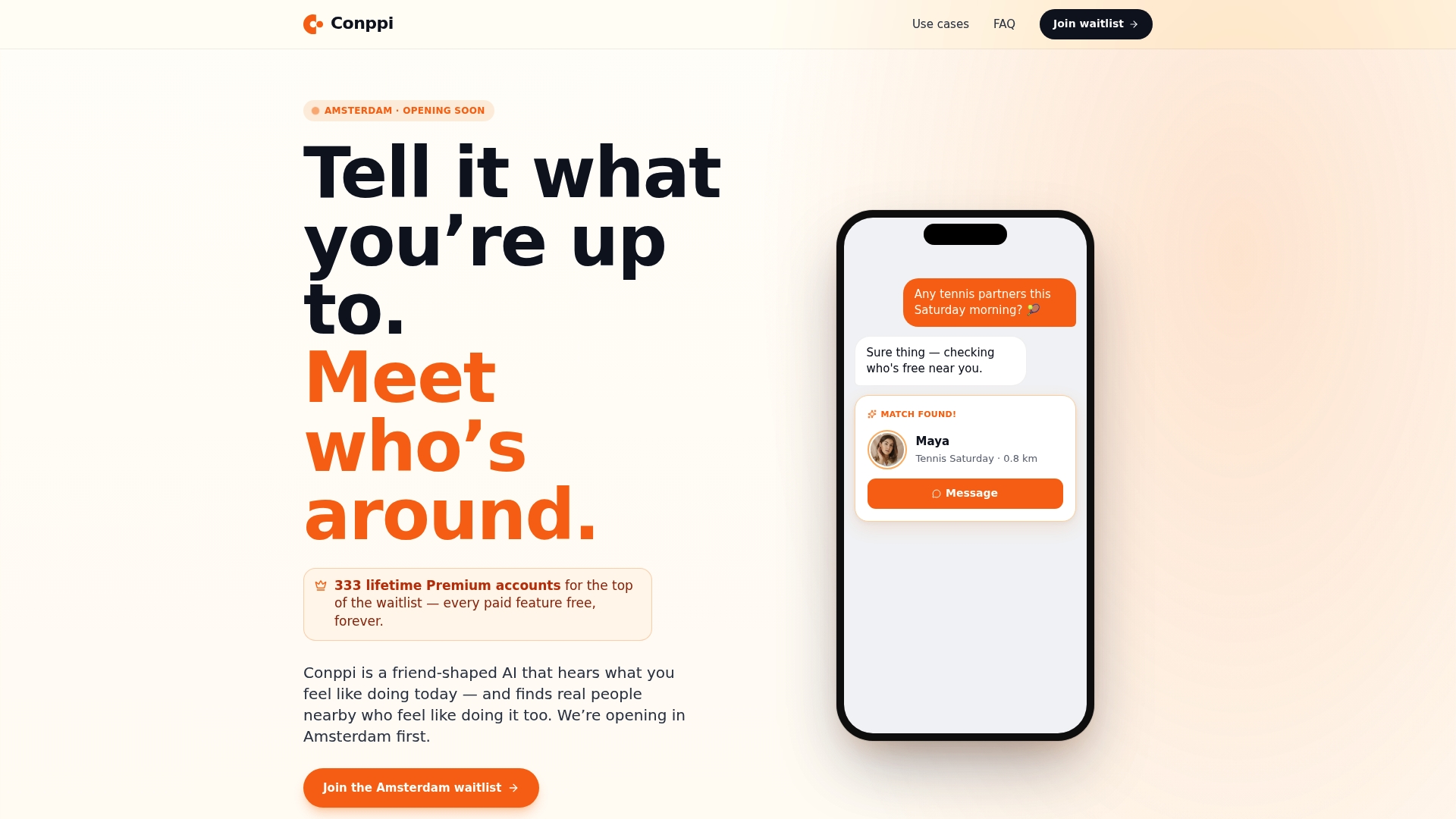
- We only share approximate distance, never an exact location, until you choose to meet.
- Posting a session takes a minute and puts you in front of people already looking for the same activity nearby.
- Our Amsterdam gym buddy page is built for exactly this kind of recurring sports meetup.
Ready to find a training partner who actually shows up next week? Try our activity partner app and post your first session today.
FAQ
Can you actually meet people at the gym?
Yes, gyms are a practical place to meet people, especially through recurring classes, small-group training, or brief equipment exchanges like spotting. A field experiment found that tandem workout arrangements raised attendance significantly compared to solo routines, which shows the social draw is measurable, not just anecdotal.
What is the 3-3-3 rule at the gym?
The 3-3-3 rule isn't a formally established fitness or social guideline, and definitions vary depending on where you encounter it. Some gym-goers use it informally to describe spending three minutes warming up, three main exercises per session, or three sets per movement, but there's no single standard version.
Why is Gen Z obsessed with the gym?
This article doesn't cover generational gym trends in detail, but the broader pattern fits what research on exercise shows generally: social and group settings make workouts more enjoyable and easier to stick with. Research on perceived groupness in fitness classes found that feeling part of a group during a workout predicts greater enjoyment, which helps explain why social fitness spaces draw consistent attendance.
What is the 70/30 rule in gym?
Like the 3-3-3 rule, the 70/30 rule doesn't have one universally recognized definition in fitness or gym etiquette literature.
Sources
- Friends with health benefits: A field experiment
- Perceptions of groupness during fitness classes positively predict recalled perceptions of exertion, enjoyment, and affective valence
- Received social support and exercise: emotional support predicts self-efficacy and adherence
- Can you film or be filmed in the gym? (Dutch media coverage)