
Share your phone number once a real plan exists: a day, a time and a public place, or a court, track or cafe you both know. Until then, there is no practical reason to hand it over. You do not owe it to anyone because they asked, and you can say "let's sort it here for now" without apologizing. This guide is for people in Amsterdam who are meeting others for tennis, coffee, a co-working day or a walk around the city, and who want to know exactly when a number makes sense.
The short version is simple. A number is useful on the day, when you need to say "I'm at the entrance" or "running five minutes late". It is rarely needed before that. Below you will find a timing guide for each type of meet-up, signs that it is fine to share, scripts for saying no or asking without pressure, and what to do if you already shared and want to undo it.
TL;DR
- Share your number after the plan is fixed (time, place, activity), or on the day itself, not during the first chat.
- Dutch public health advice says anything shared with someone you only know online can be stored and forwarded, so decide on purpose what you share.
- A consistent person accepts "not yet" without sulking. Pressure for a number, money or codes is your signal to stop.
- If you regret sharing, you can block the number, report the person, and tell your contacts if your number is being spoofed.
- Activity-first meeting reduces how much you need to exchange at all, because the shared activity does the trust-building.
Table of Contents
- The rule of thumb: plan first, number second
- Why waiting a little is reasonable
- A timing guide by type of meet-up
- Signs it is fine to share
- How to offer or ask for a number without pressure
- If you have already shared and want to undo it
- Keeping in touch without handing over your number
- Why meeting through an activity changes the question
- Find an activity partner without trading numbers first
- What to do on the day of the meet-up
- FAQ
- Sources
The rule of thumb: plan first, number second
Most advice about phone numbers comes from dating, where the number is a sign of romantic interest. That framing does not fit when you are looking for a padel partner or someone to share a desk with. For these meet-ups the number has one job: coordination.
So ask yourself a practical question: does the other person need to reach me right now to make this happen? If you have already agreed on Thursday, 18:30, the courts near the Amstel, the answer is usually no. If you are both walking toward the same meeting point in thirty minutes and cannot find each other, the answer is yes.
That gives you three moments when sharing makes sense:
- On the day, shortly before the meet-up, when you need to find each other.
- After the first meet-up went well, when both of you want to repeat it.
- When a group plan grows, and a shared group chat is easier than juggling messages.
Sharing during the first exchange of messages, before anything is planned, does not fit any of these. It only gives the other person a direct line to you without a reason.
Why waiting a little is reasonable
Two Dutch sources explain why it pays to slow down.
The Dutch public health service GGD advises against giving your phone number or other personal details to someone you only know online, because anything shared online can be stored and forwarded. It also describes how frequent contact makes a person feel familiar and trusted even though you have never seen them. That feeling is the reason to decide in advance what you will share, rather than deciding in the moment when the conversation is going well.
Conversation scientist Wyke Stommel, interviewed by NU.nl, makes a related point: keep chatting inside the app until a meeting is arranged, because once numbers are exchanged it becomes easier for the other person to gather information about you, while the app still works as a kind of wall. She also suggests a video call as an intermediate step before meeting, since what you see and hear tells you more than text does.
None of this means people who ask for your number are dangerous. Most are not. It means the number is yours to give at a moment you pick, and a short delay costs you nothing.

A timing guide by type of meet-up
Different plans carry different needs. Use this as a starting point and adjust to your own comfort.
| Situation | When sharing makes sense | What to do before that |
|---|---|---|
| One-off sports session (tennis, padel, running) | On the day, once you are heading to the venue, or after the session if you want to play again | Fix time, venue and skill level beforehand |
| Coffee meet-up | Usually on the day, if you need to find each other | Pick a busy cafe, tell a friend where you are going |
| Co-working session | After the first session, if you want a regular routine | Agree on hours and a place with other people around |
| Traveler meeting a local | On the day, or not at all if the plan is fixed | Agree a landmark and a time in advance |
| Language exchange | After one or two sessions that felt comfortable | Meet in public the first times |
| Regular group activity | When you join a group chat that several people share | Check who is in the group first |
Notice the pattern: the less information a plan needs, the later the number appears. A fixed time and a clear meeting point replace the number completely for a first meeting.
Expats and newcomers: the pull to share fast
If you have just arrived in Amsterdam, you may feel pressure to make friends quickly, and handing out your number can feel like proof that you are open and friendly. You can be open without being reachable around the clock. Saying yes to a coffee does not mean saying yes to daily messages. Newcomers are also a group scammers target, so the same slow pace applies to you as to anyone else.
Signs it is fine to share
Time alone is not evidence. A person can send a hundred charming messages in one evening and still be someone you should not trust. What matters is how they behave. Before sharing, look for these:
- They respect "not yet". If you say you would rather arrange things first, they accept it without guilt-tripping or going cold.
- Their story stays the same. Where they live, what they do and what they want from the meet-up does not shift from message to message.
- They talk about the activity. The conversation is about the court, the route, the work session, not about your finances or private photos.
- No money talk. Stommel warns that when someone starts talking about money, for instance successful investing or working in finance, alarm bells should ring.
- You feel comfortable. If you feel rushed or unsure, that is enough reason to wait. You do not need stronger proof than your own discomfort.
And these are reasons to stop sharing anything further: asking for money, one-time codes, private images or access to your accounts, pressing for a call before you are ready, or getting angry when you decline.
For a closer look at meeting someone for the first time, our guide to staying safe when meeting strangers in the Netherlands walks through three quick checks.
How to offer or ask for a number without pressure
Asking for a number should feel as light as asking what time suits. A few lines that work:
When you want to share on the day: "I'll be at the entrance around 18:25. Want to swap numbers in case we miss each other?"
When you want to keep it in the app for now: "Let's keep it here until Thursday, then I'll send my number when I'm on my way."
When someone asks too early and you are not ready: "I like to meet first and swap numbers after. See you Thursday?"
When you want to ask someone else: "Want to set up a regular game? We could start a quick chat so it's easier to organize." Then accept a "later" as a full answer.
When you want to set a limit on how you are reached: "Message me anytime before 21:00 and I'll reply. I'm offline after that."
A sharing moment is also a character test. The way someone reacts to "not yet" tells you how they will react to other boundaries. If you want more wording for awkward moments, our seven scripts for conversation boundaries cover them.
If you have already shared and want to undo it
Changing your mind is allowed. The GGD says you can end online contact honestly but briefly if it no longer feels right, and that if you are bothered, threatened or blackmailed, you can stop responding, block the person and report them in the app. A short message is enough: "I've decided this isn't for me. Take care." You do not have to justify it.
To block a number, BNNVARA's consumer program Kassa explains the steps on both Android and iPhone. It also notes that Android can block unknown callers, though legitimate callers may then be hidden as well.
The Dutch consumer authority ACM ConsuWijzer adds some points. If the same caller keeps bothering you, you can block the number on your phone, and stalking should be reported to the police. Number spoofing, where someone calls from a disguised number, is forbidden. If your own number is spoofed, tell your contacts and report it to the Fraudehelpdesk and the police.
If the unwanted calls come from a company rather than a person, Dutch rules since 1 July 2021 let companies and charities call you only if you gave permission or have a customer or donor relationship. Kabelnoord's explanation notes that saying you do not want to be called again is your right of objection, and that unwanted calls can be reported to ConsuWijzer.

Do not publish your number
A number posted publicly gets collected. Radar reported in September 2026 that scammers approach people who list their phone number in Marktplaats ads and push them toward phishing links to steal bank details. A Fraudehelpdesk spokesperson advises keeping as little personal data public as possible. The same logic applies to a group post or a bio: share your number with a person, not with an audience.
Keeping in touch without handing over your number
Sometimes you want to stay in contact but are not ready to share a number. Some options by type:
- Keep arrangements in one place until you meet, so there is no loose thread that needs a number.
- Use an encrypted messaging app that lets you hide your number. Security researcher Martin Shelton's guide to locking down Signal recommends setting who can see your number to "Nobody". Contacts who already had your number may still see it through their own contacts app, so set this before you share, not after.
- State your limits. Sharing a number does not make you available at all times. Say what is not okay, such as calls late in the evening or texts during work hours.
If you are at all unsure about a person, tell a friend the plan before you go: who you are meeting, where, when, and when you will check in. That habit matters more than any app setting.
Why meeting through an activity changes the question
Most advice on phone numbers assumes you have a profile, a stream of messages and a growing sense of closeness with someone you have never seen. That is where the pressure to "take it off the app" comes from, and where it is hardest to say no.
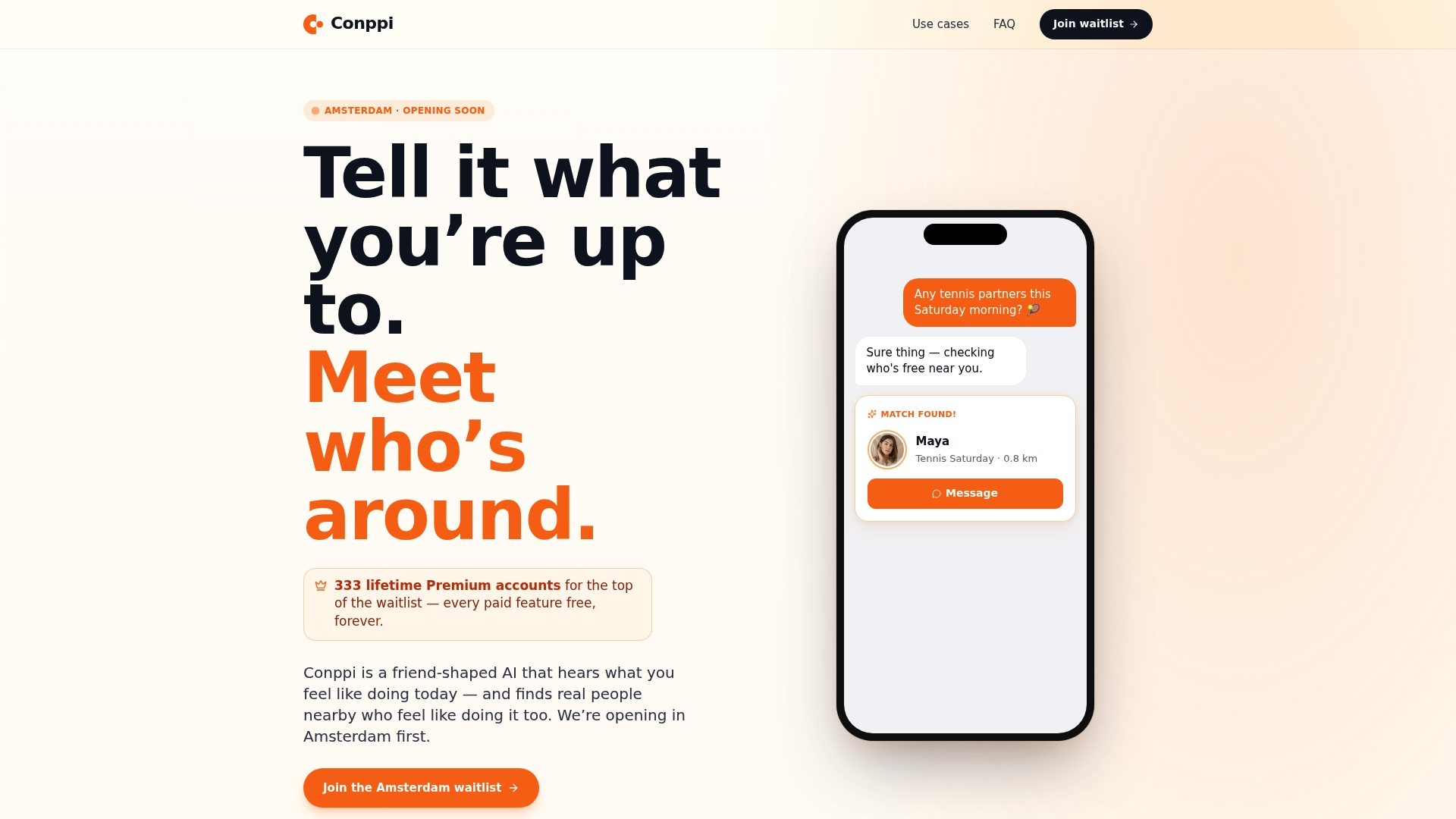
We built Conppi around a different starting point. You find someone nearby who wants to do the same thing at the same time, whether that is padel, a run, a coffee or a work session. There are no profiles to perfect and no swiping, and the app shows only approximate distance, not where you are. The activity is the reason you are meeting, so the plan fills the space that a number would otherwise fill.
In practice, that means the question changes from "when do I give this stranger my number?" to "when do I want to play again?" For most people the second question is far easier to answer, and it arrives only after you have met. We are opening in Amsterdam first so there are enough people nearby for plans to come together quickly, and a quick plan needs no long chat to be comfortable.
If you want to see how it works in more detail, we wrote about apps without profiles and sharing distance instead of exact GPS.
Ilya
Find an activity partner without trading numbers first
Conppi is a mobile app for iOS and Android that matches you with people nearby for real-time activities: tennis, padel, gym, running, cycling, swimming, co-working, coffee meet-ups, language exchange, or meeting locals while you travel. You choose the activity and filters such as time and skill level, and you can organize a one-on-one or a group. There are no profiles and no swiping, and the app shows only an approximate distance between you and the other person.
If you want a workday companion in the city, the page on finding people to co-work with in Amsterdam is a good place to start. For everything else, see the activity partner app.
What to do on the day of the meet-up
A few habits make the first meeting smoother and reduce how much you need to share:
- Confirm the details a few hours before. Time, place and activity. A clear plan means you rarely need a call.
- Pick a public place. A busy cafe, a club court or a co-working space with other people around.
- Tell one person the plan. Name of the person, place, time and when you will check in.
- Share your number only if you need it. If you both arrive on time and the meet-up goes well, you can swap numbers at the end.
- Remember you can leave. You may end a first meeting at any time, without giving a reason.
- Follow up soon if you liked it. A short message within a day or two keeps the momentum. Our guide on meeting people without swiping explains a simple post, show up and follow up rhythm.
If you want to turn a single meet-up into a routine, the four steps in turning an activity into a regular plan can help. And if you prefer to avoid social media altogether, meeting people without social media in Amsterdam covers that.
FAQ
Is it safe to give my phone number to someone I just met?
It depends on how little you have to share and how well you know them. Dutch public health advice from the GGD is not to give your number or other personal details to someone you only know online, since anything shared can be stored and forwarded. After a meet-up in a public place where things went well, sharing is much lower risk.
How long should I wait before sharing my number?
There is no fixed number of days. A better test is whether you have a plan and whether the person has stayed consistent and respected your pace. For a first meet-up, you can wait until the day itself, or until after you have met.
How do I politely say I would rather not share yet?
Keep it short and friendly: "I like to meet first and swap numbers after." You do not need to give a reason. If the other person pushes back or gets annoyed, that tells you something useful about them.
What can I do if someone keeps calling or messaging me after I said stop?
Stop replying, block the number on your phone and report the person in the app you met through. If it turns into stalking or threats, report it to the police. If someone is using a disguised version of your number, tell your contacts and report it to the Fraudehelpdesk.
Can I keep in touch without giving my real number?
Yes. Keep arrangements in one place until you meet, or use an encrypted messaging app and set it so that nobody can see your number. Do that before you share, since people who already have your number may still see it.
Sources
- Online daten, Jouw GGD
- Met deze tips ga je veilig op date, NU.nl
- Last van ongewenste telefoontjes? Dit kun je eraan doen, BNNVARA Kassa
- Ik krijg vervelende telefoontjes, ACM ConsuWijzer
- Last van ongewenste telefoontjes, Kabelnoord
- Waarom je nooit je telefoonnummer moet vermelden bij een Marktplaats-advertentie, Radar
- Locking down Signal, Freedom of the Press Foundation